
QuiltCon 2026
Once again, my favorite week of the year has come and gone in a haze of quilts, hugs, and entirely too much coffee. QuiltCon is the largest modern quilt show in the world, and the production of the Modern Quilt Guild. 2026 was our fifth year vending, and my fourth year on the faculty. Once again, it was one for the books, and I have lots of thoughts about the show!
(This post may contain affiliate links)

This year QuiltCon returned to Raleigh, NC. Last time we were in Raleigh, the show had record breaking attendance, and it was a colorful blur of fabric and teaching. Nonetheless, it’s a great venue and city for QuiltCon, and we were delighted to return. Unlike 2024, I actually managed to see the quilt show this year, and I have thoughts!
Members of the Modern Quilt Guild and attendees at QuiltCon tend to be progressive, politically and socially. Current events have given more than enough fuel for thoughts and feelings, and I believe our collective emotions were reflected in this year’s show. My friend Frances affectionately called it, “Coping QuiltCon.” And, lest you think that made this year’s event a somber one, I can assure you it was quite the opposite. It was tender and vulnerable in many ways, but there was also the usual raucous joy that can only come from being with your people.
The Quilt Show
While walking the quilt show, two themes immediately jumped out:
As usual, there was a powerful collection of quilts addressing current events. And, there was also a slight sense of de ja vu. I even asked a friend, “Does this show remind you of 2017?”
2017 was my first QuiltCon, and it has stayed with me in a special way. While 2017 was still fairly early days in modern quilting as we know it, quilters were already playing with themes of place, distorting and reimagining classic blocks, depicting faces, and doing lots of color exploration.
This year felt retrospective to me, not in a redundant or “modern quilting has peaked” way (though I did hear someone pose the question), but in a maturing cycle kind of way. The armchair philosopher in me also wondered if the stress of the last year nudged us back toward themes that feel safe and familiar as spaces of creative outlet. As Frances said, our quilting was a place to cope this year. Some of us coped overtly with protest quilts, and some of us coped more quietly by re-exploring familiar trails and finding fresh delight in places we’ve been before.
Let’s take a look at some quilts!
(And, please remember that these are my observations and reflections. This is not an exhaustive overview of the show, nor is it the only lens thru which to interpret the show)
Protest Quilts
“Paying attention quilts” might be a better heading, to be honest, because all of these quilts are a response to current events, social structures, etc that affect the maker’s life, family, and community.
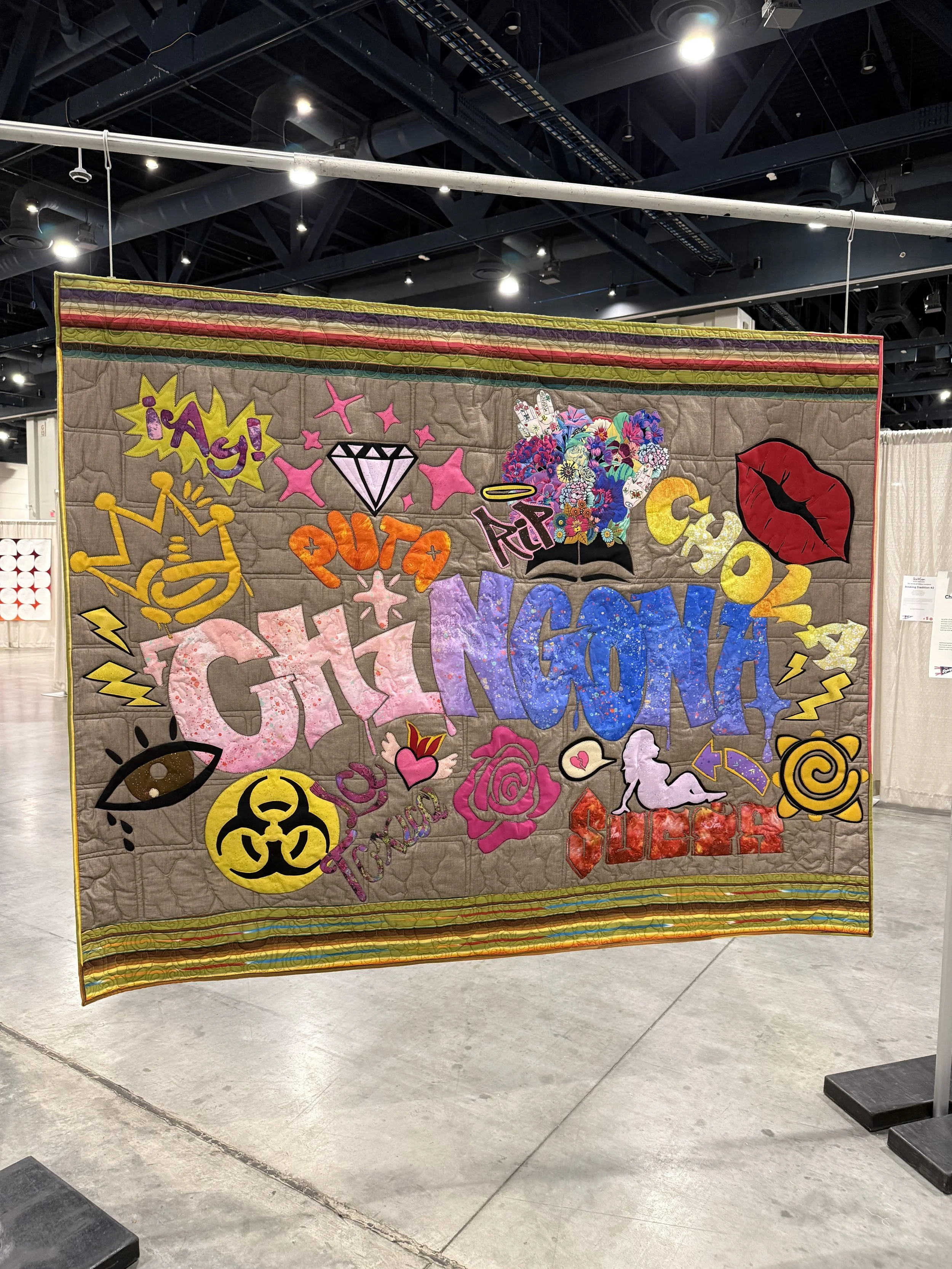

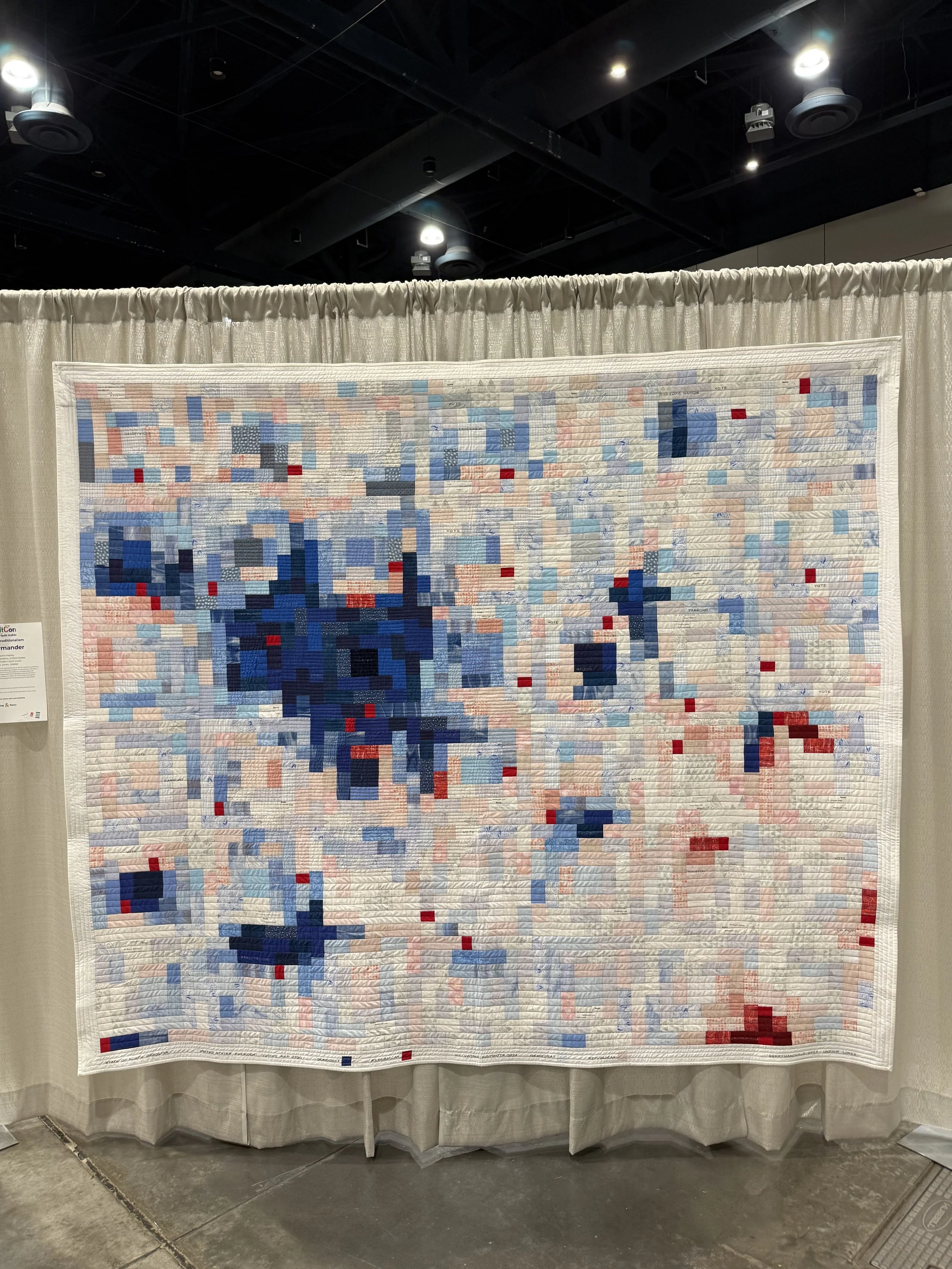

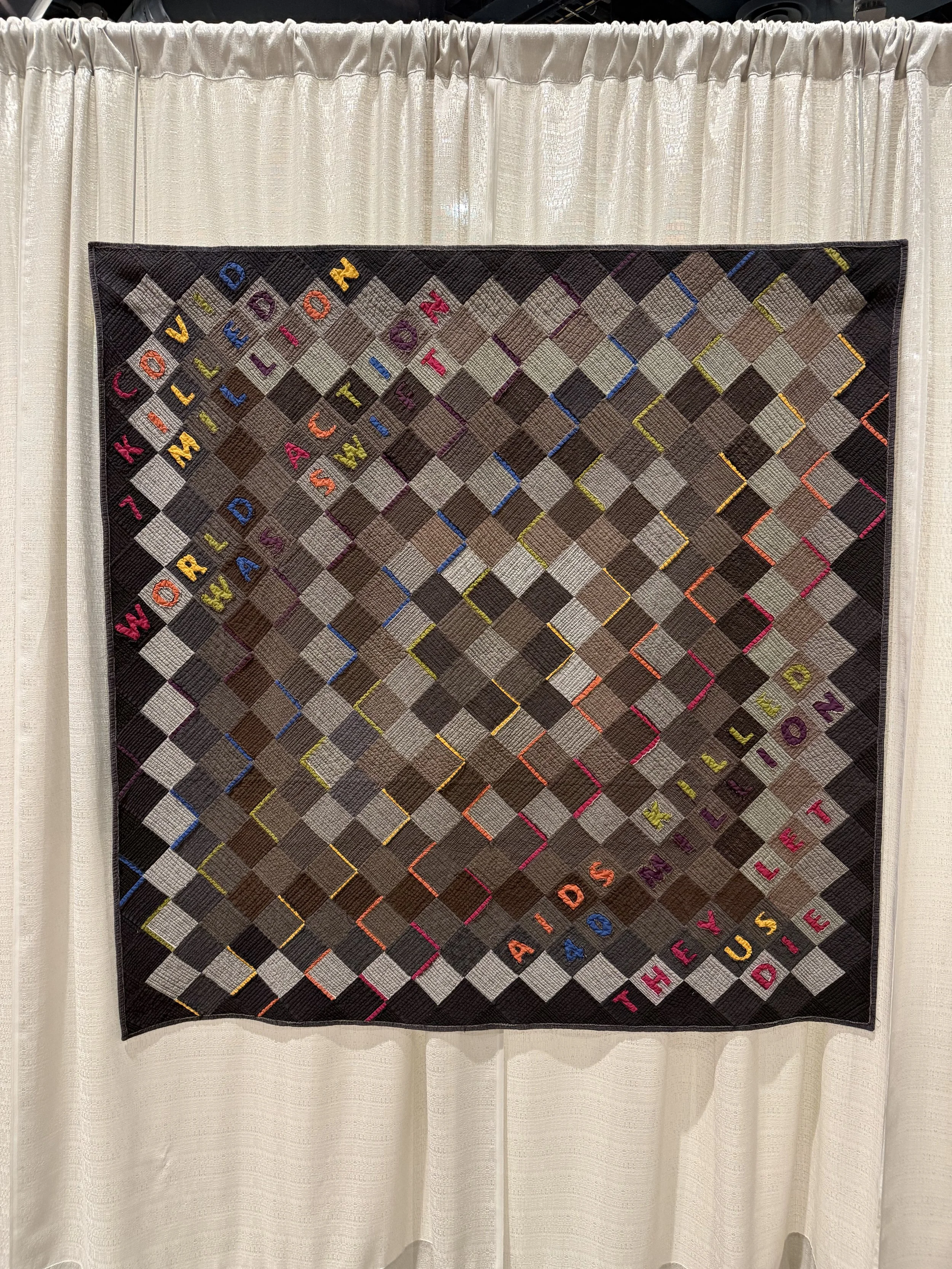
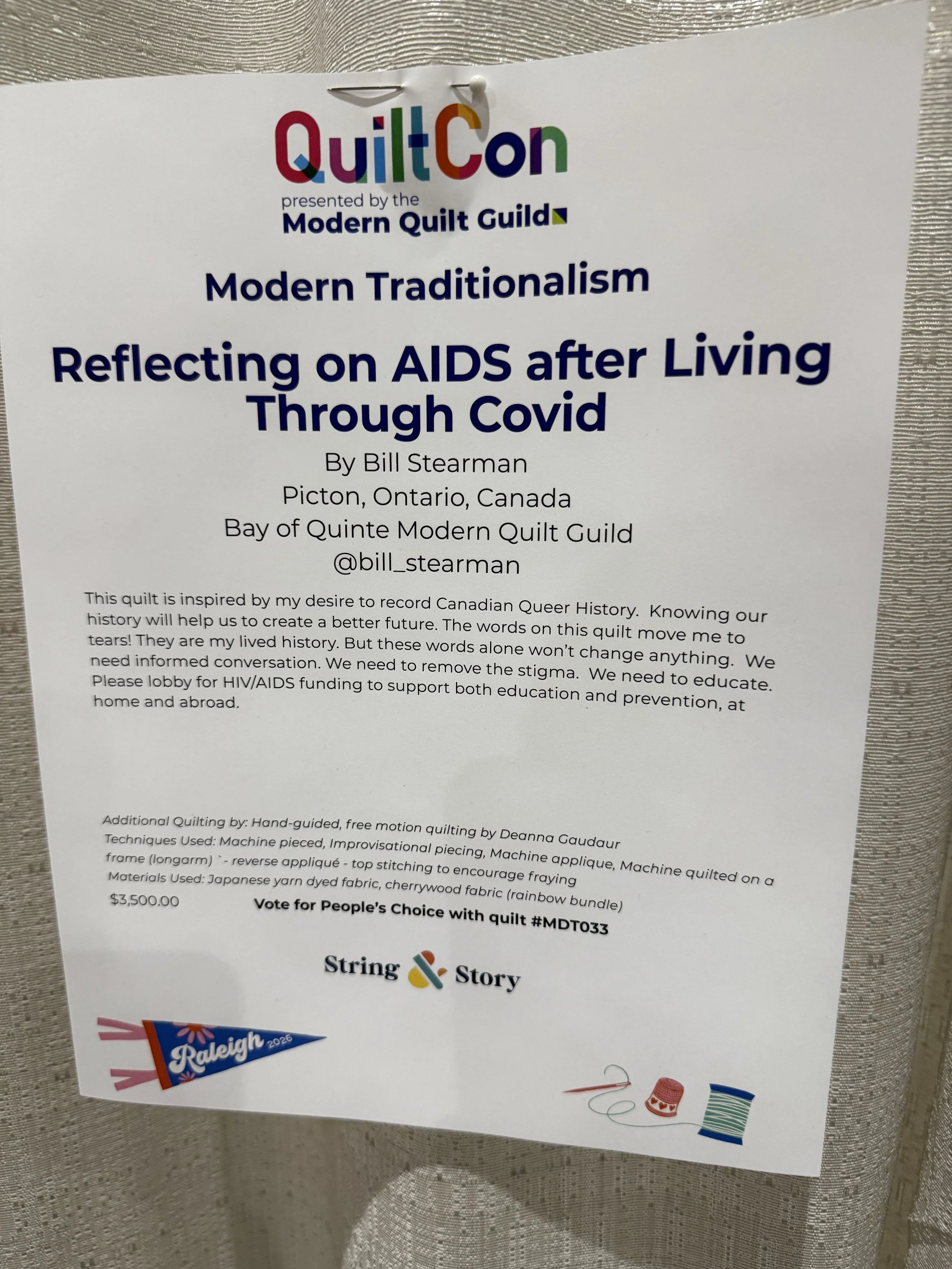


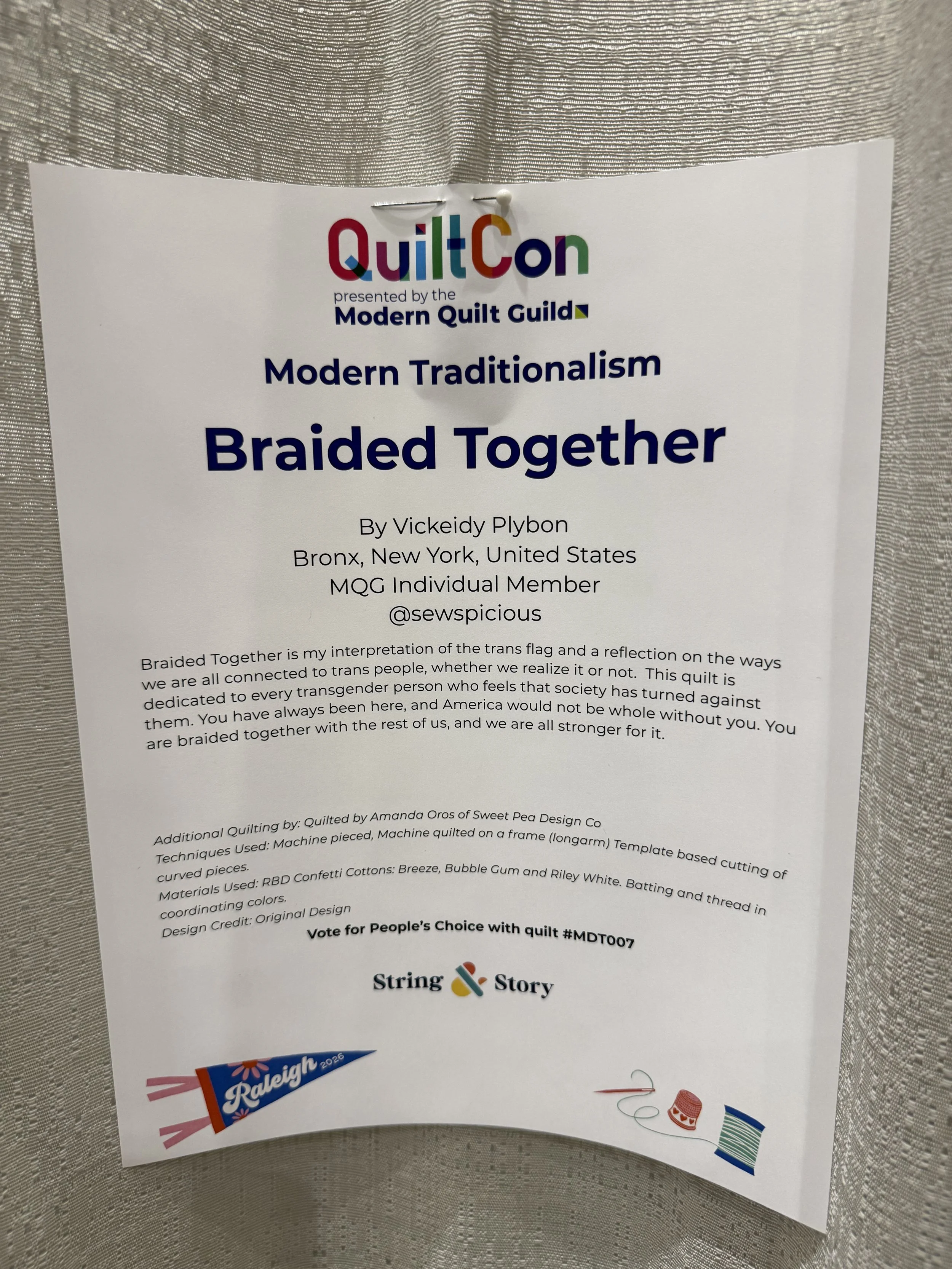


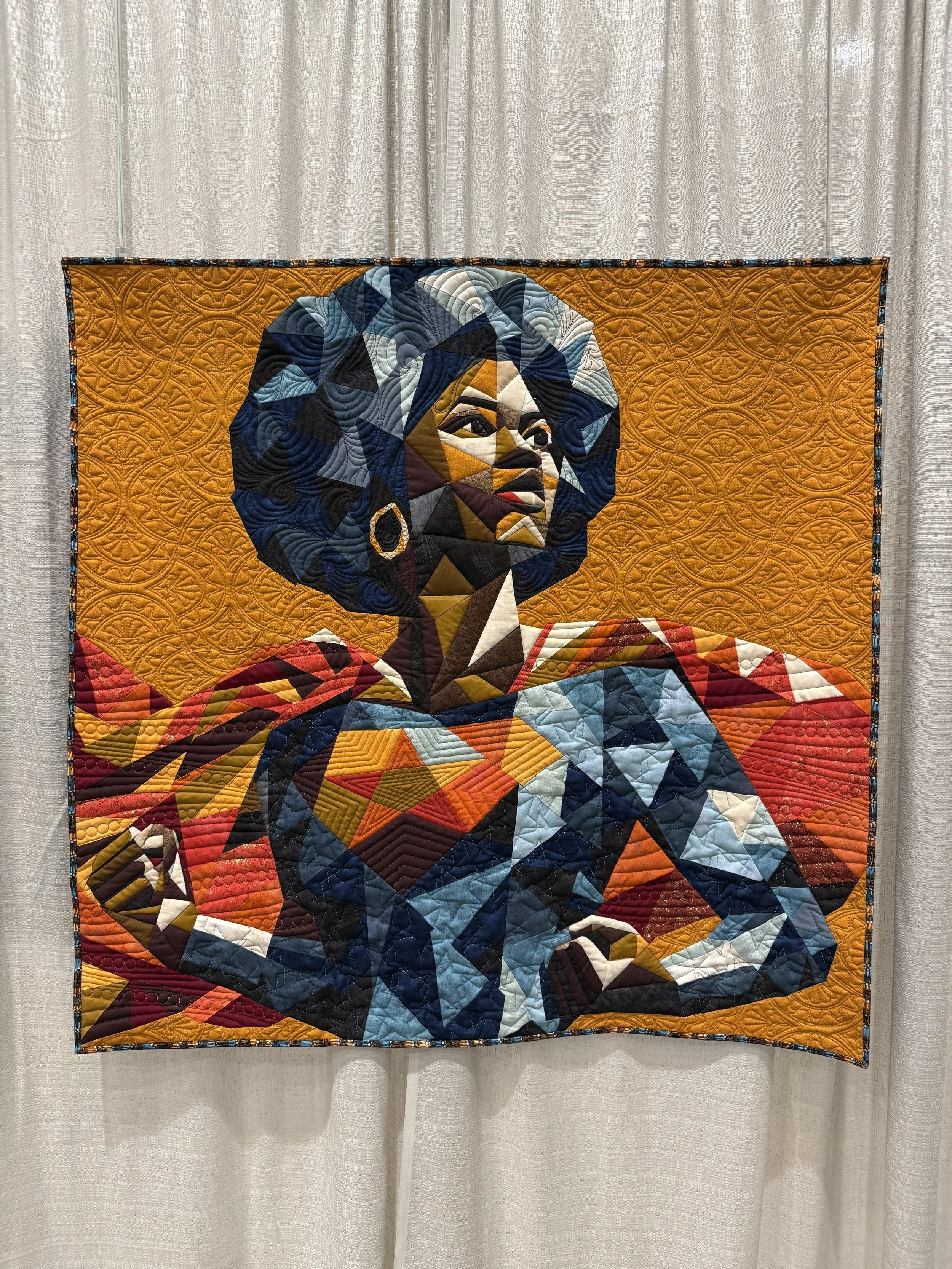


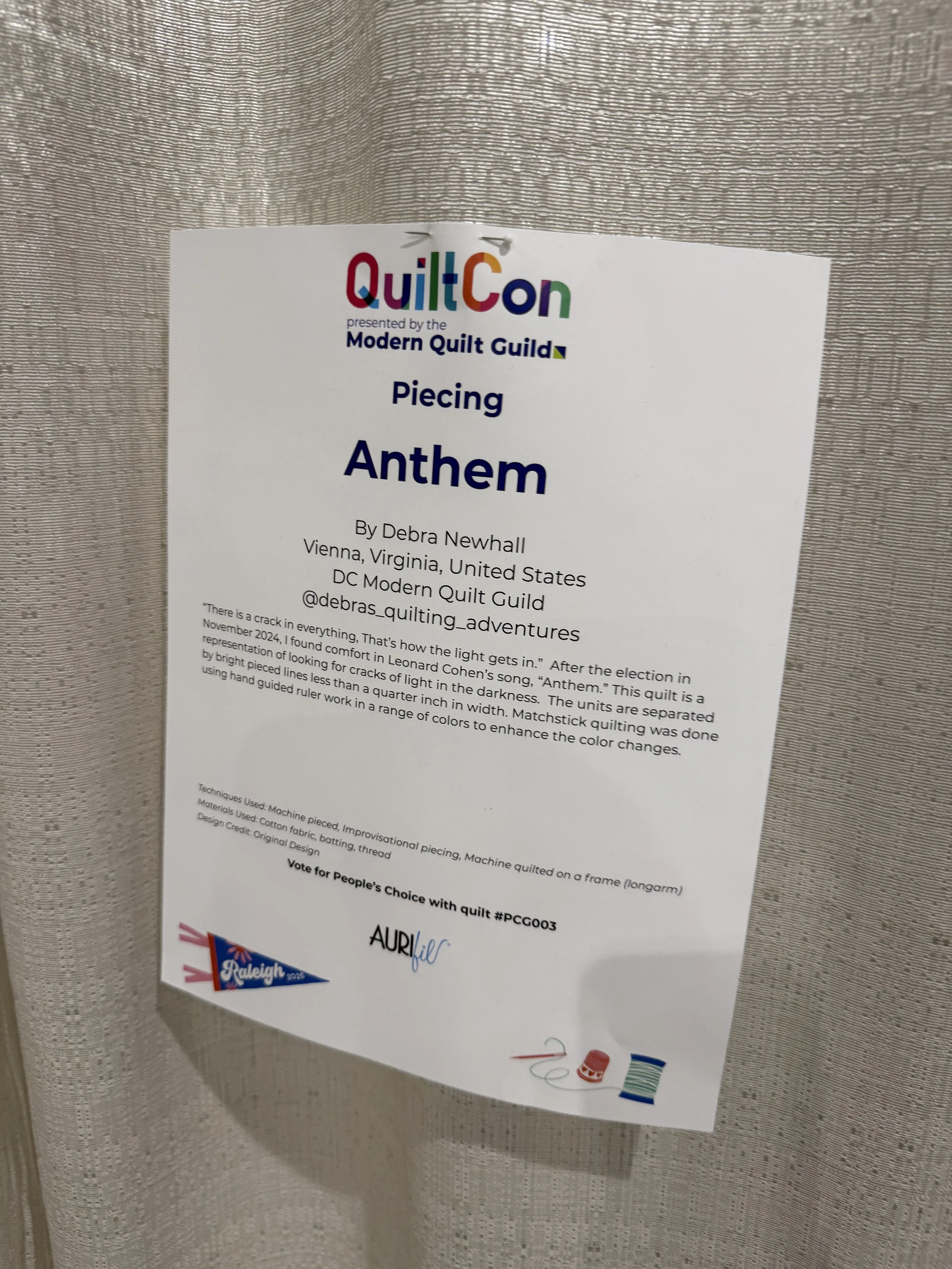
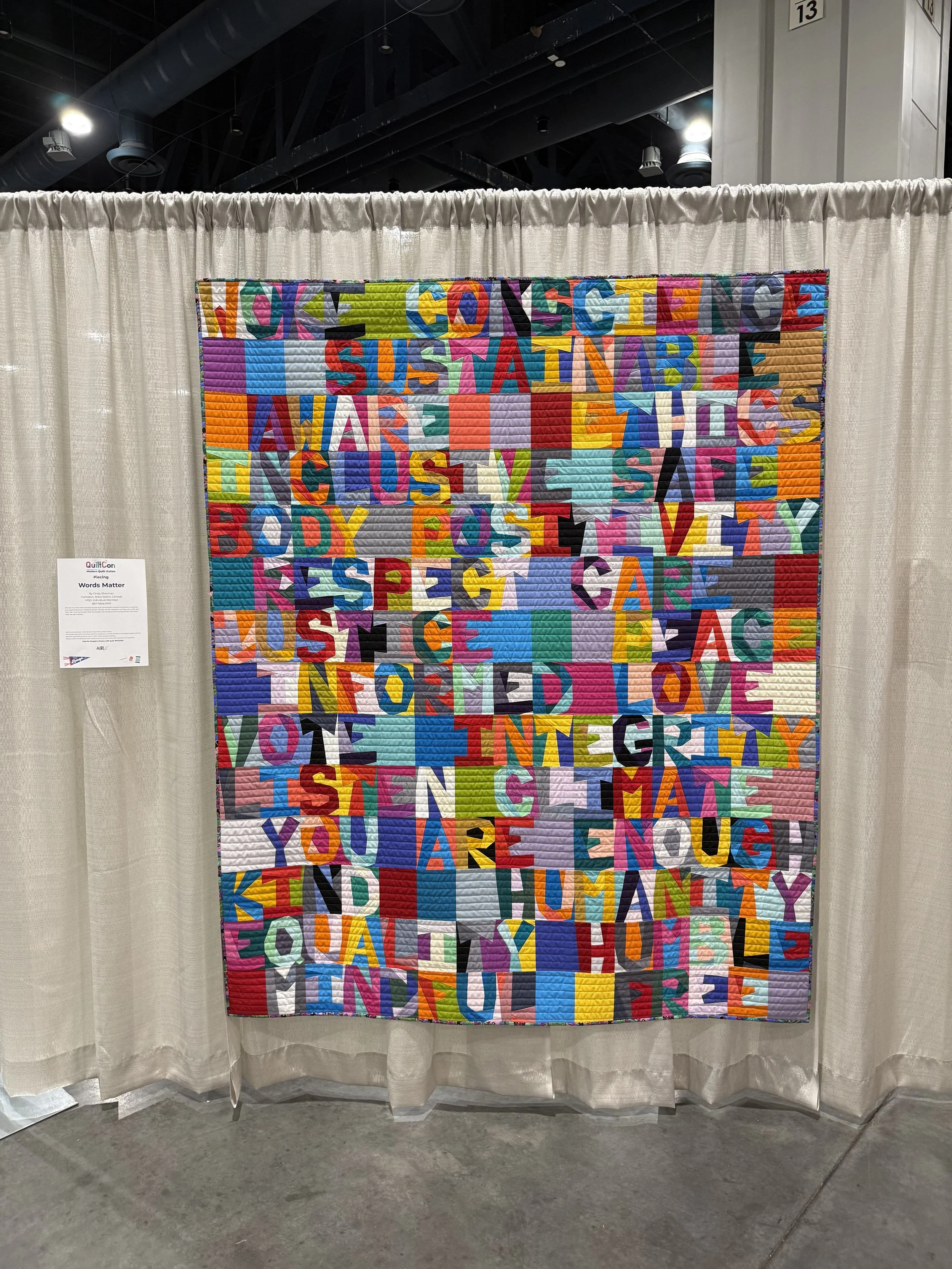
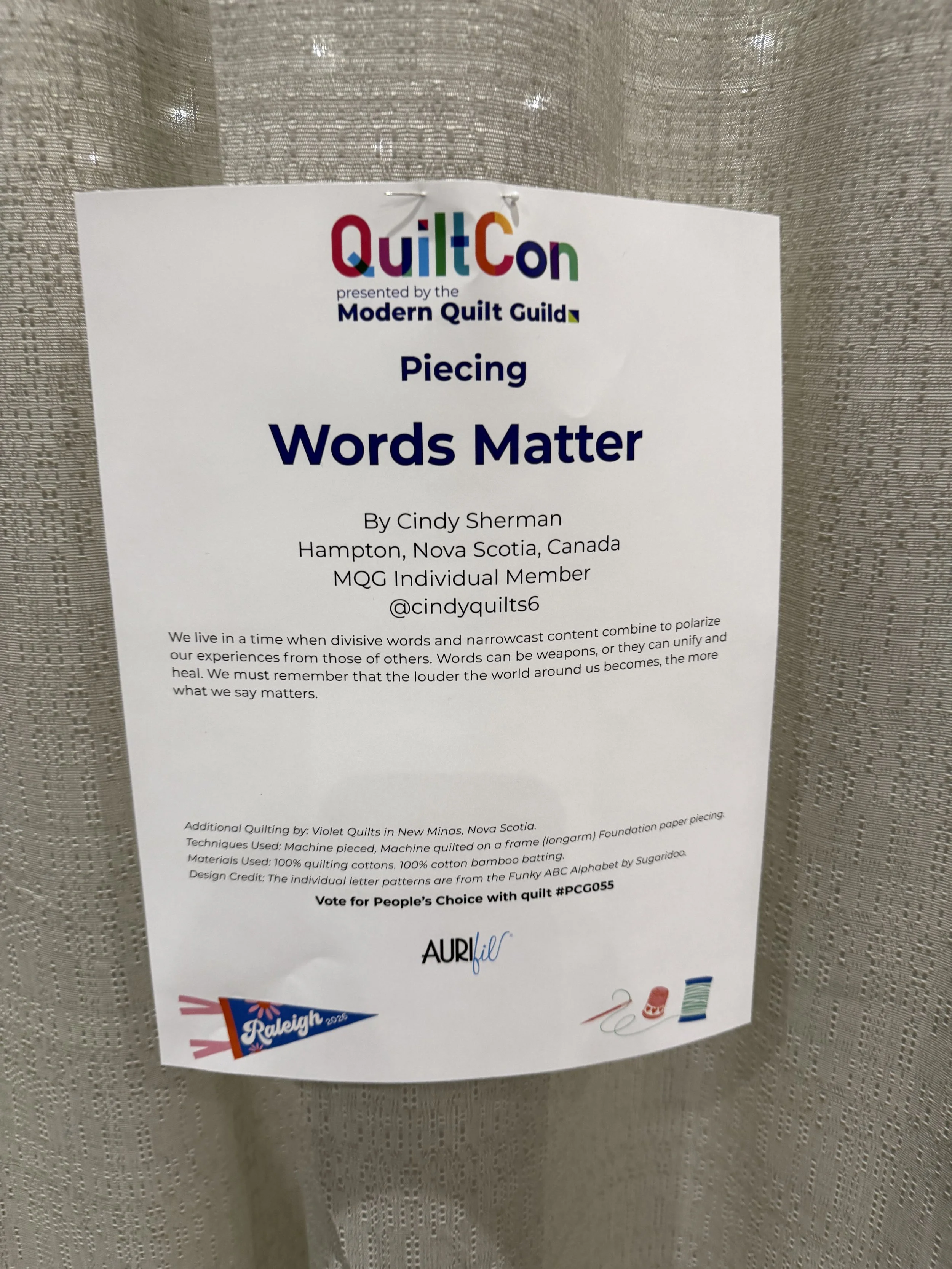
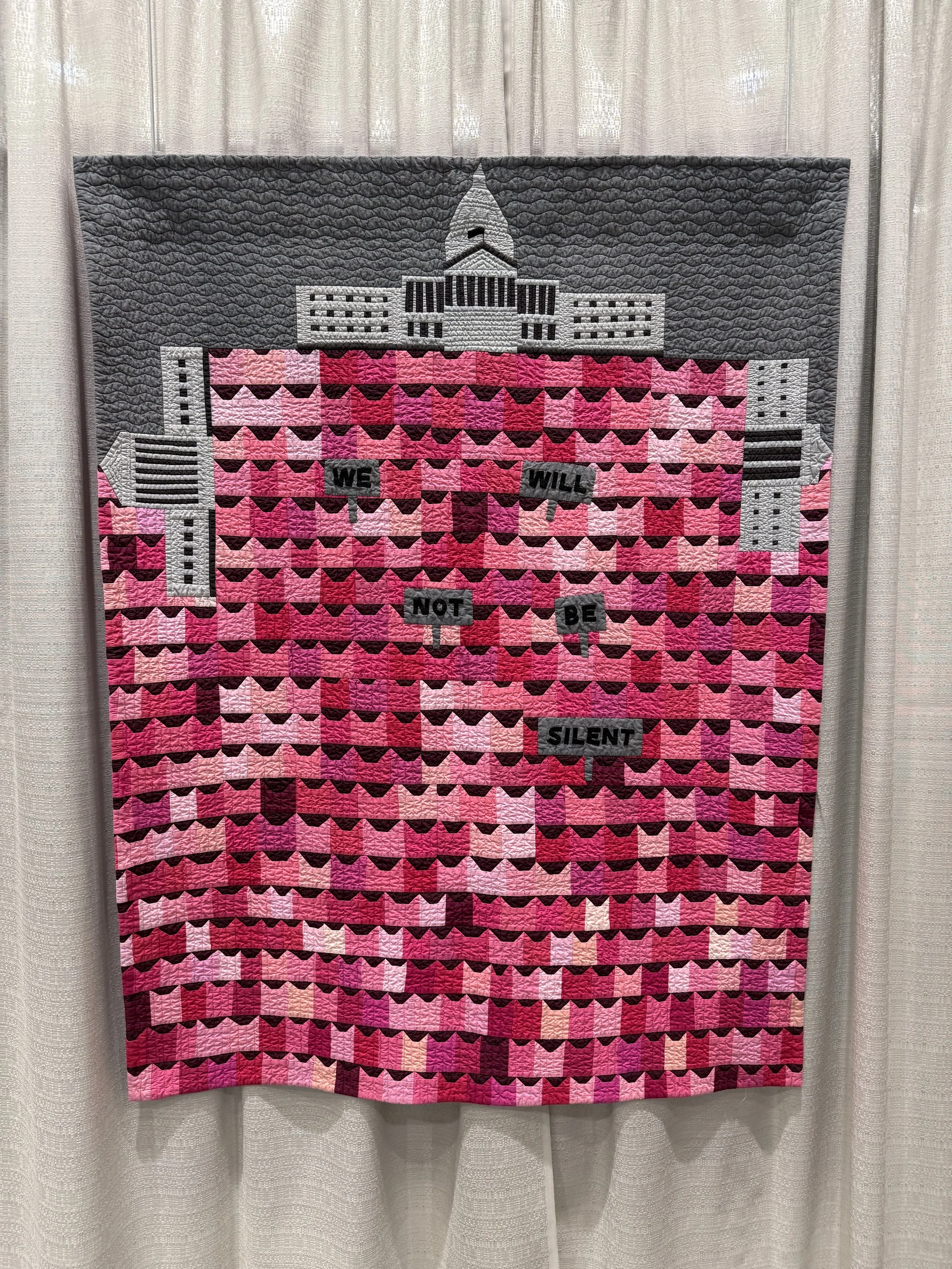
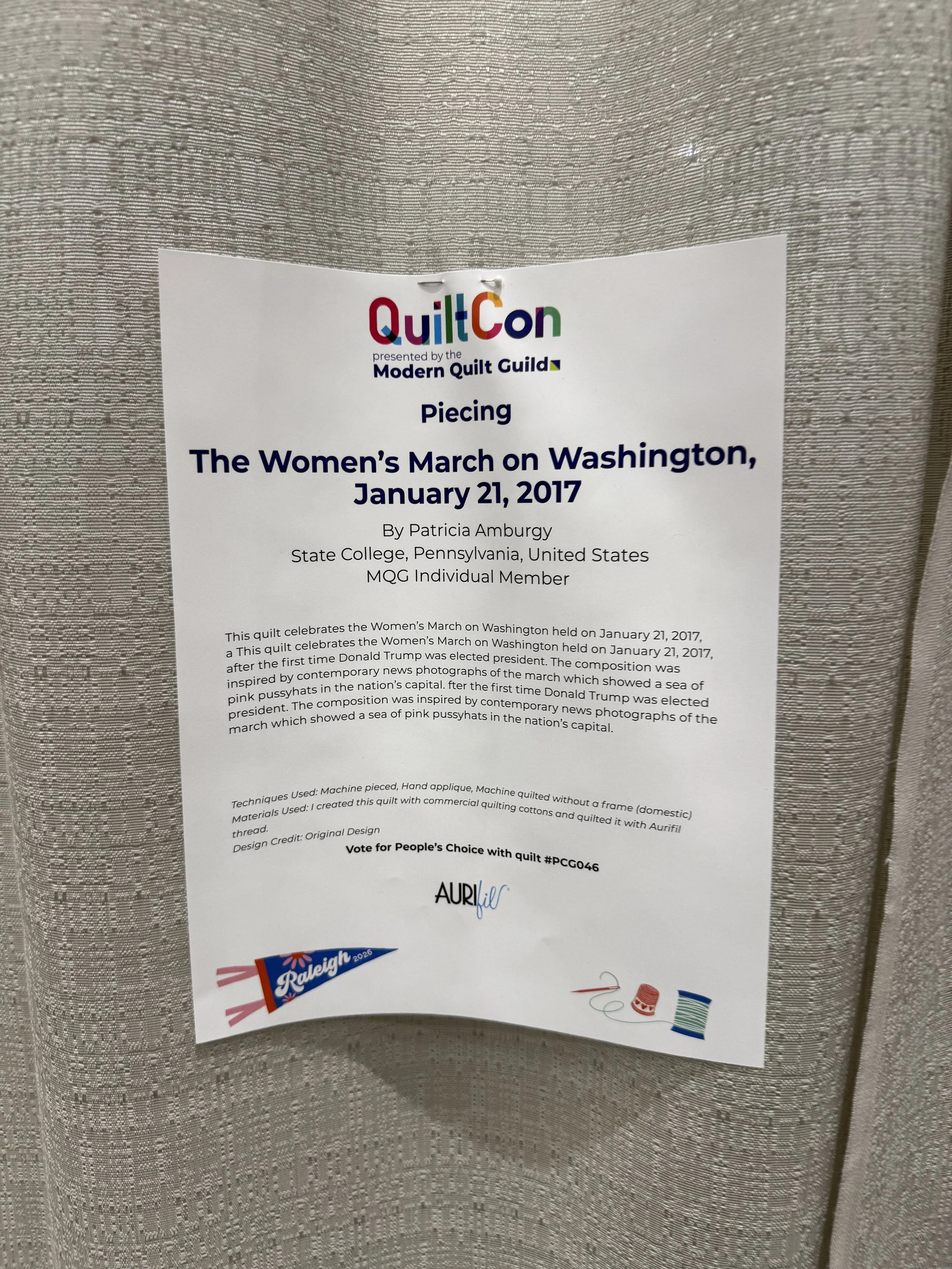
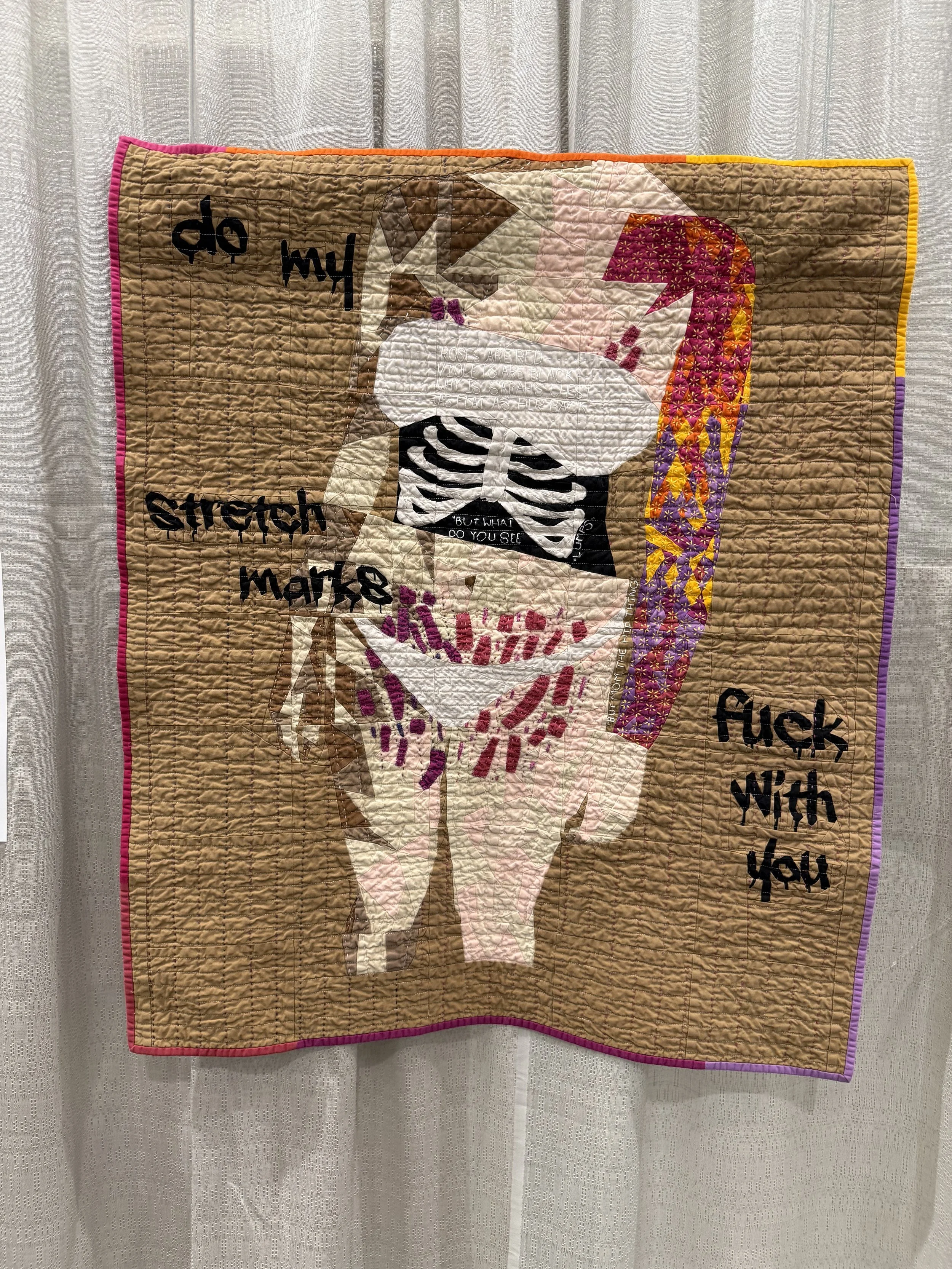
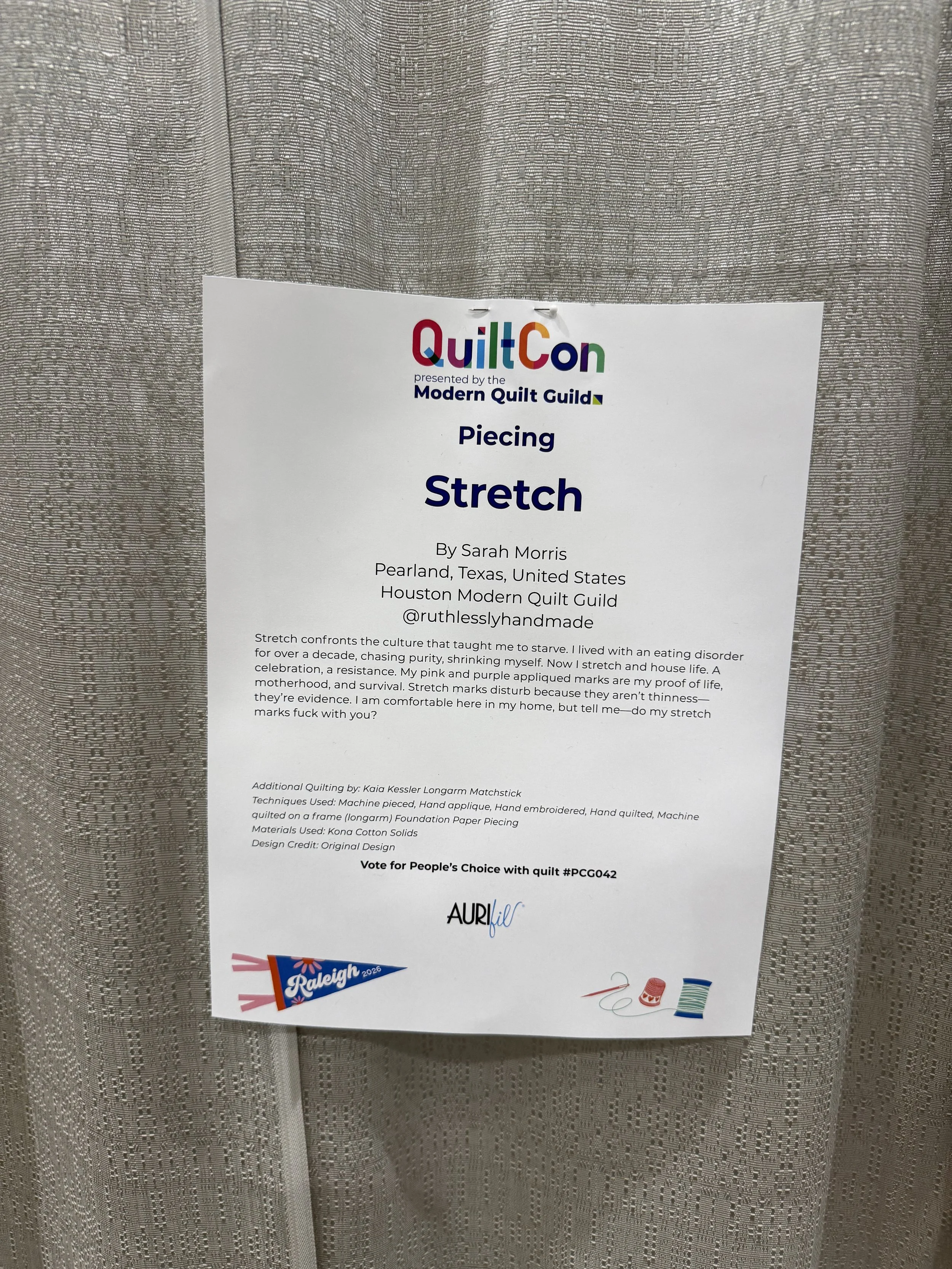


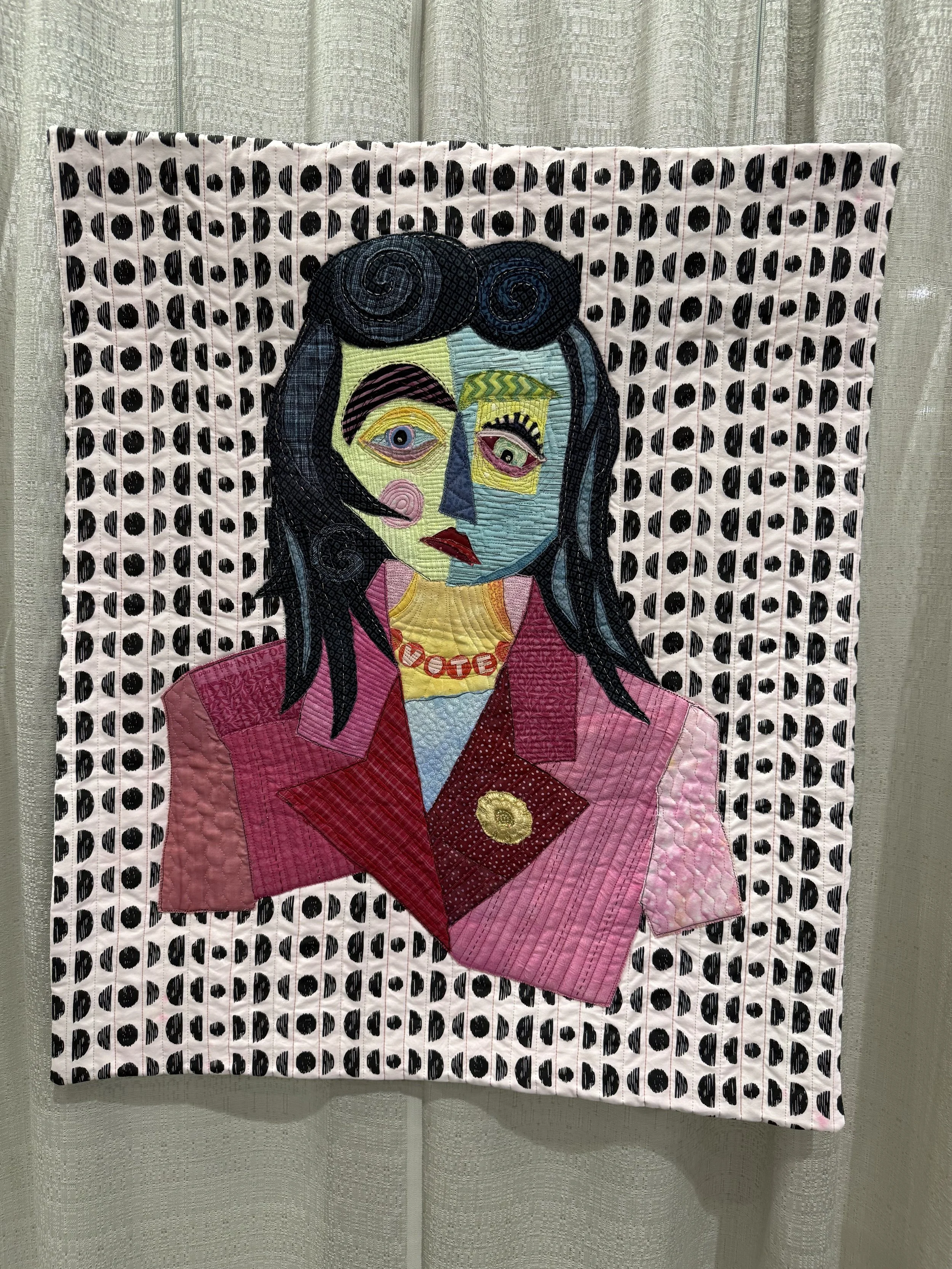

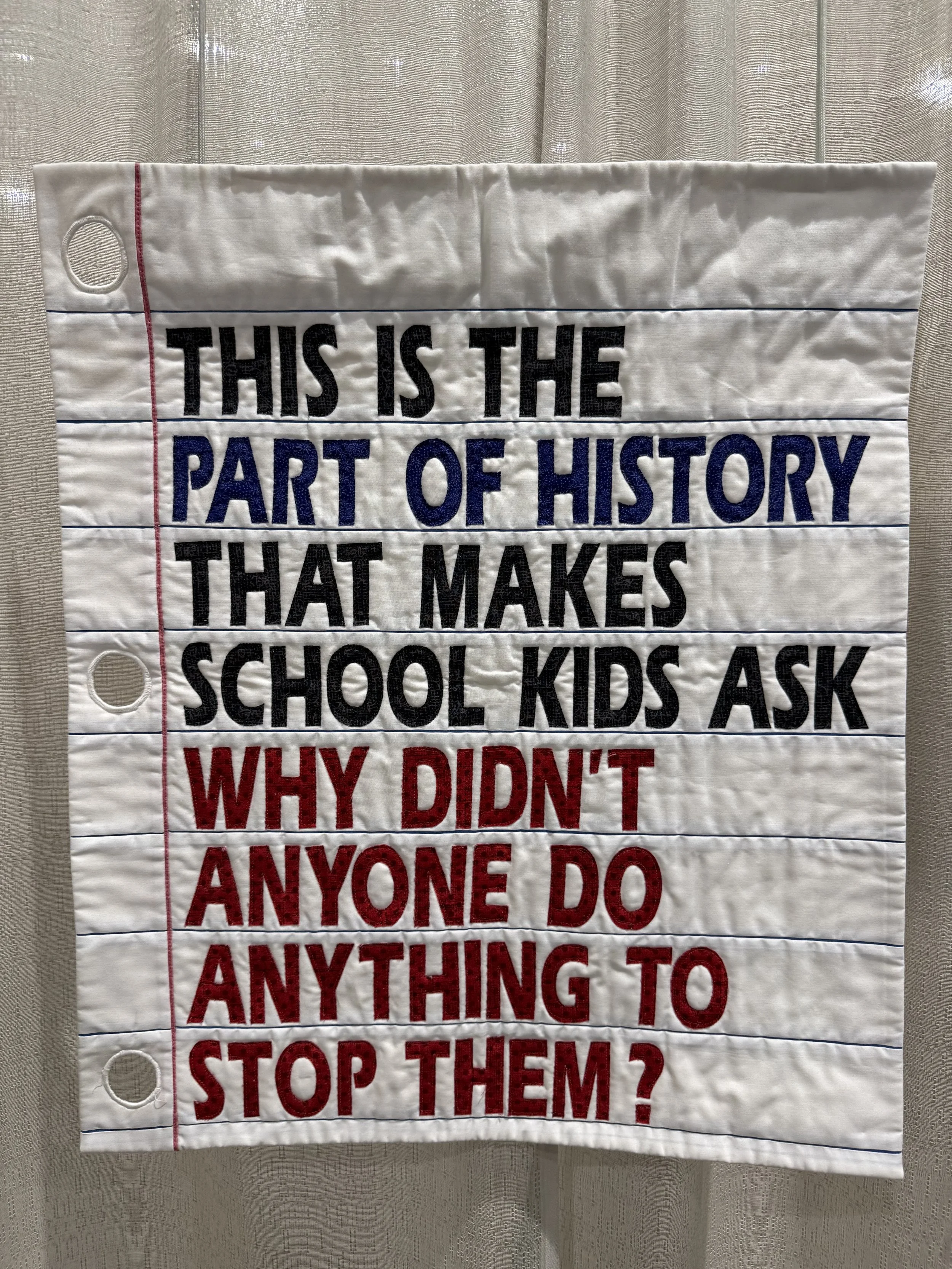
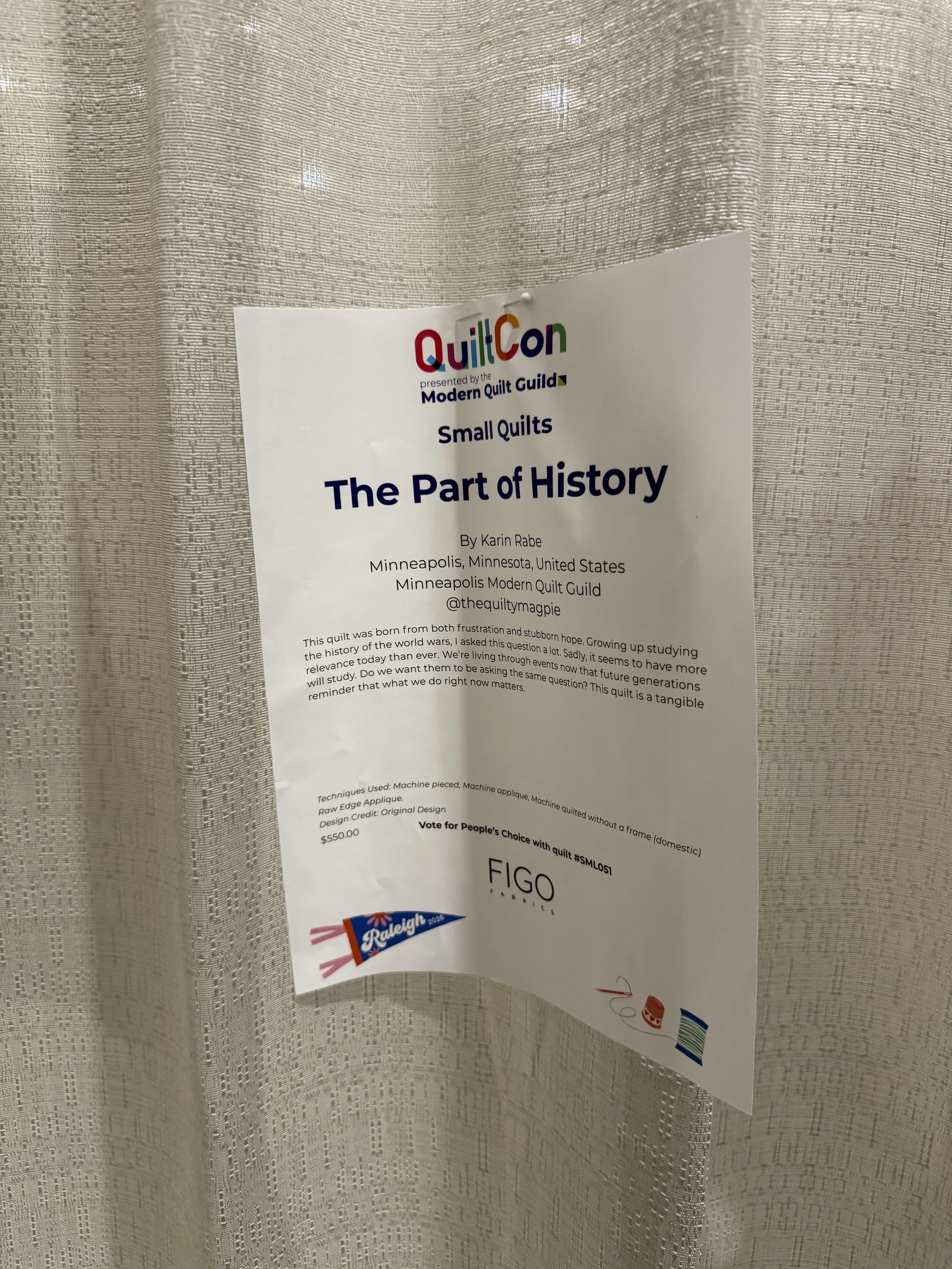


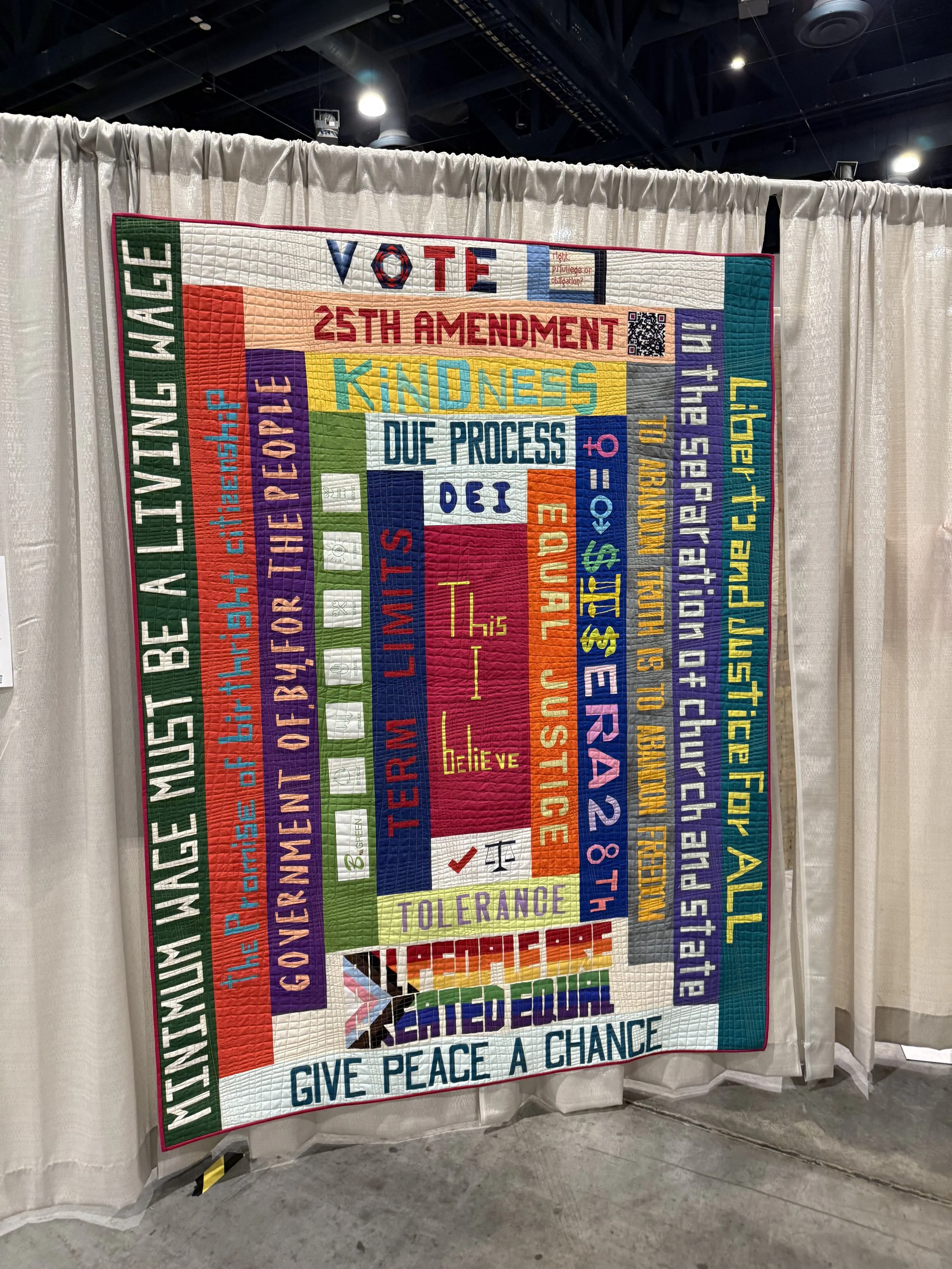


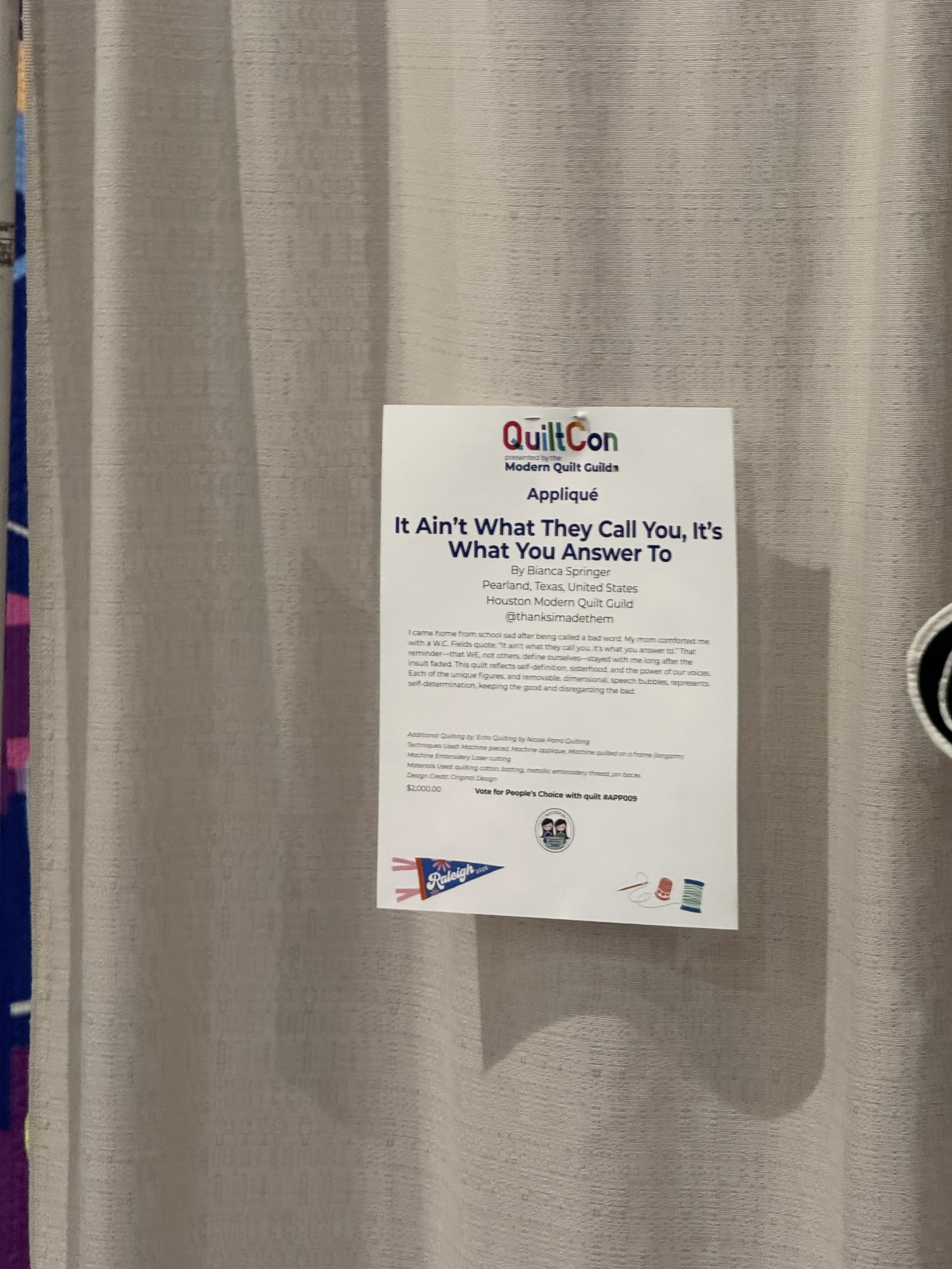

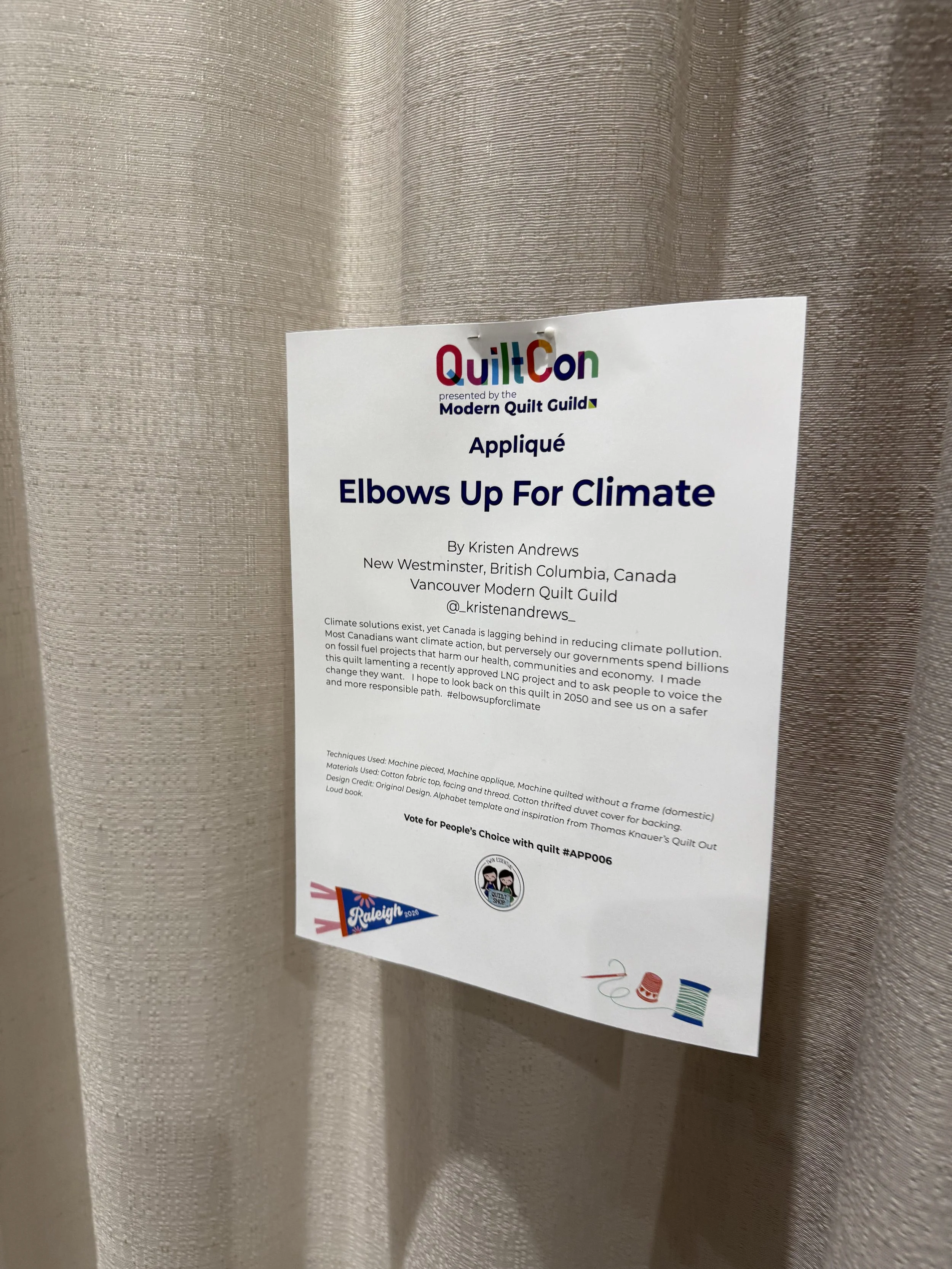

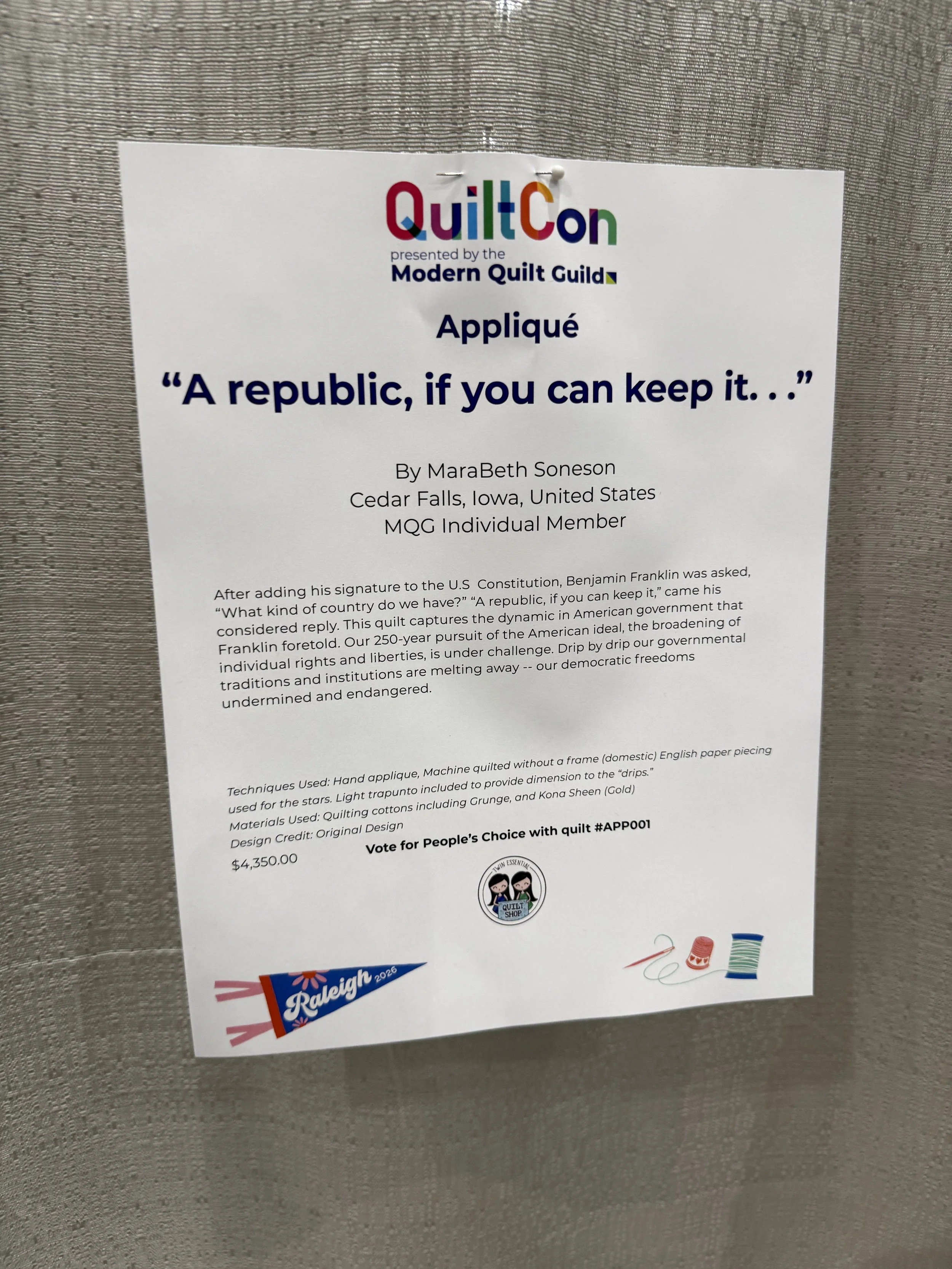
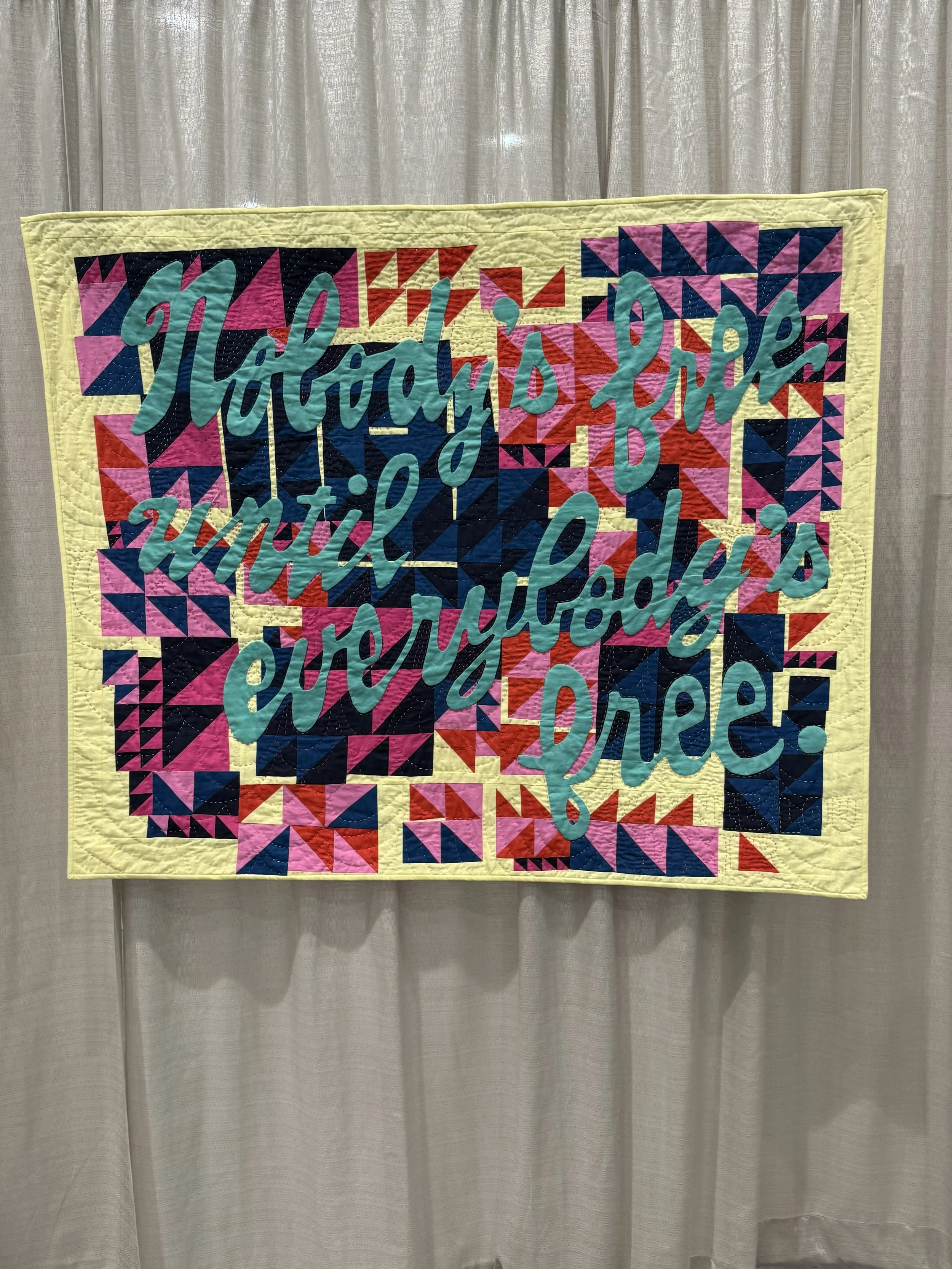

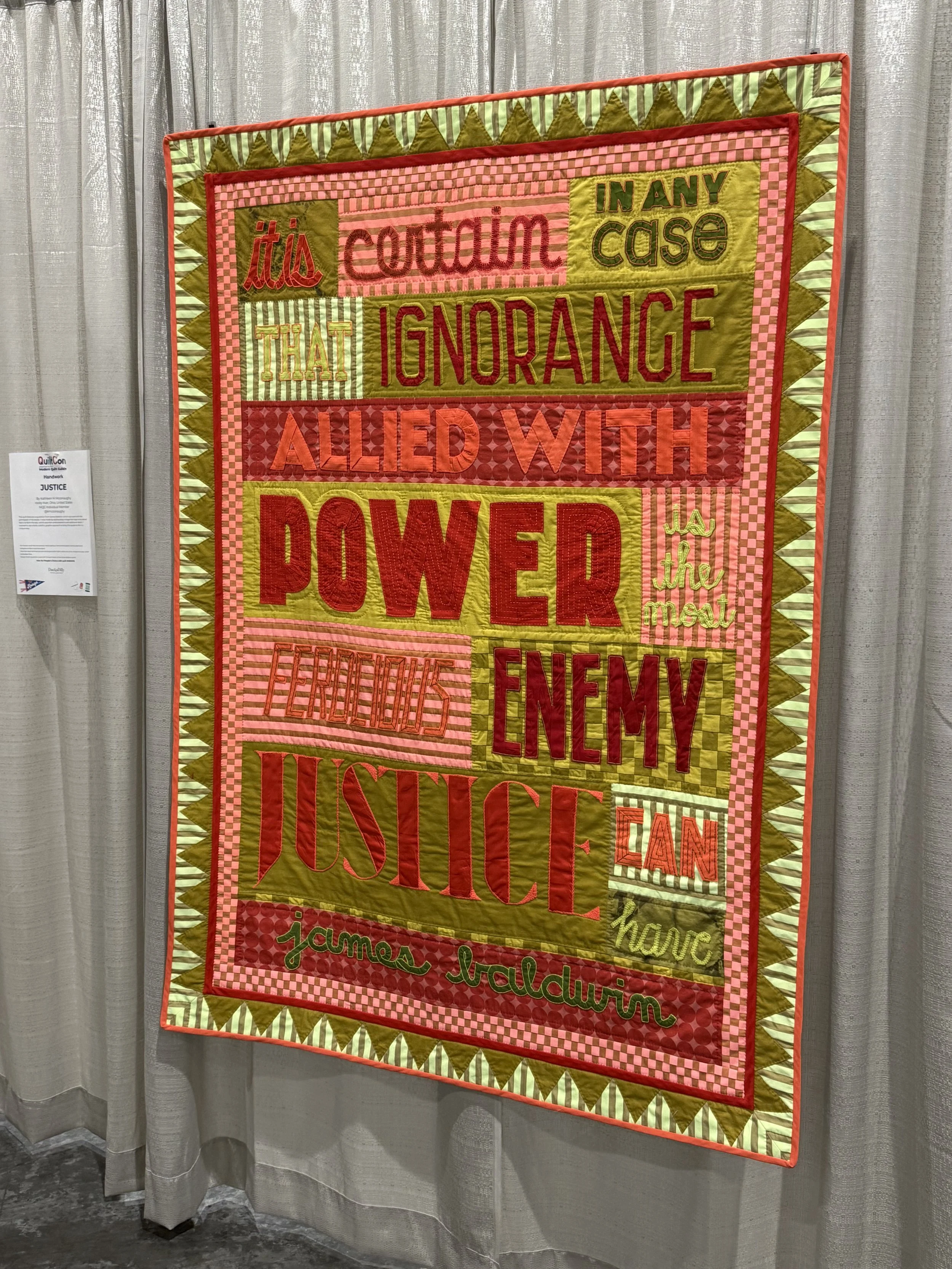
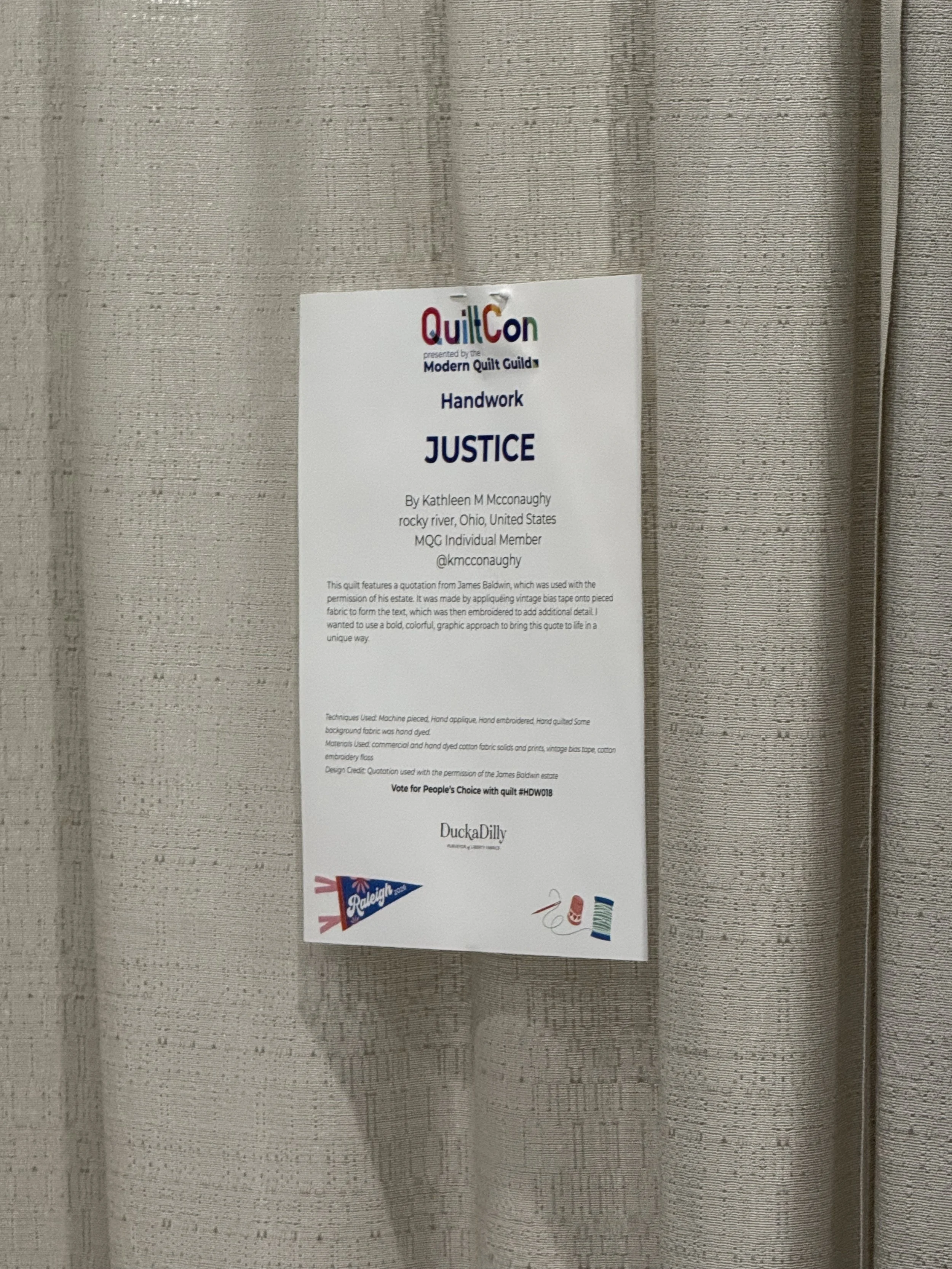
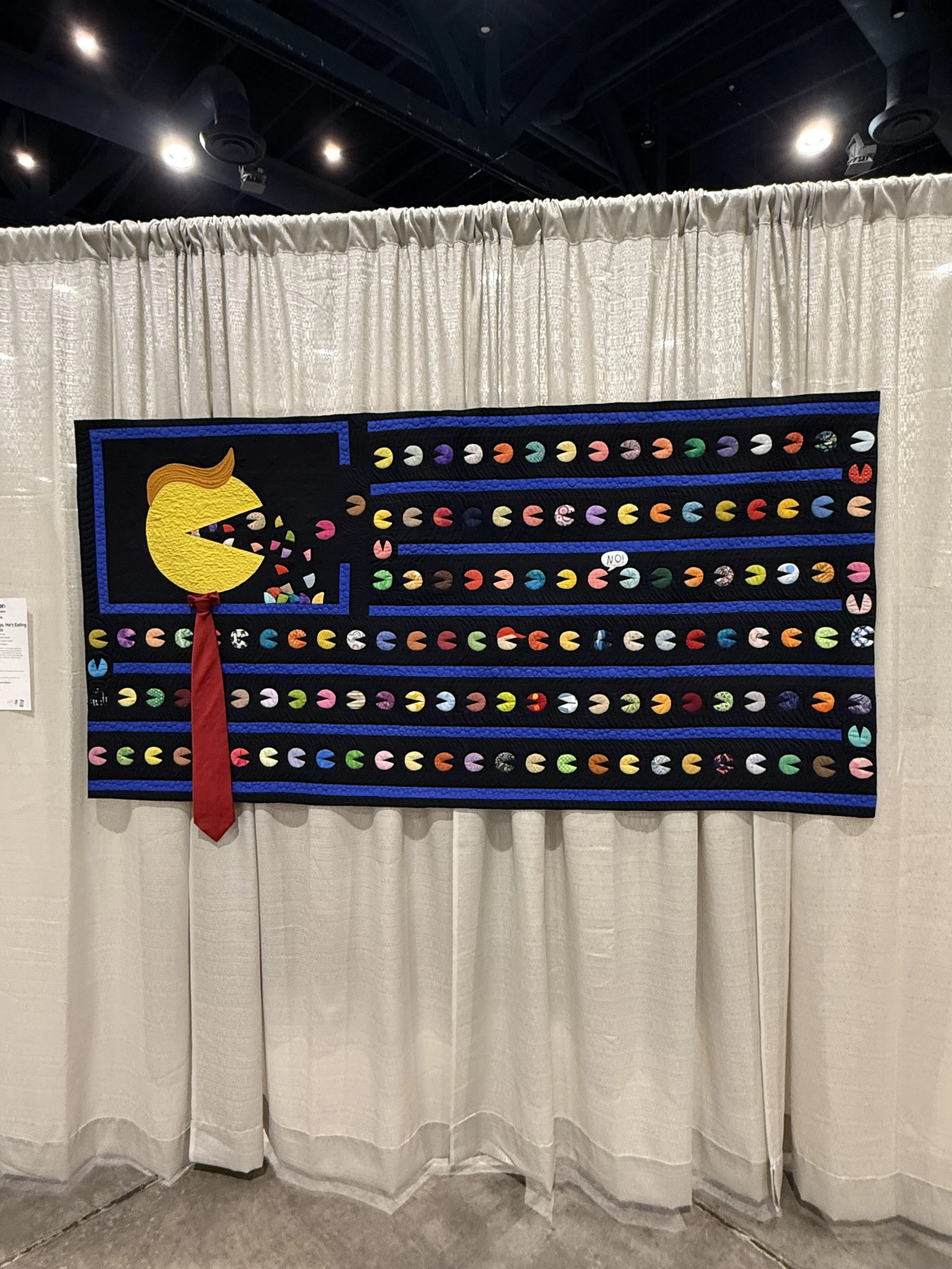
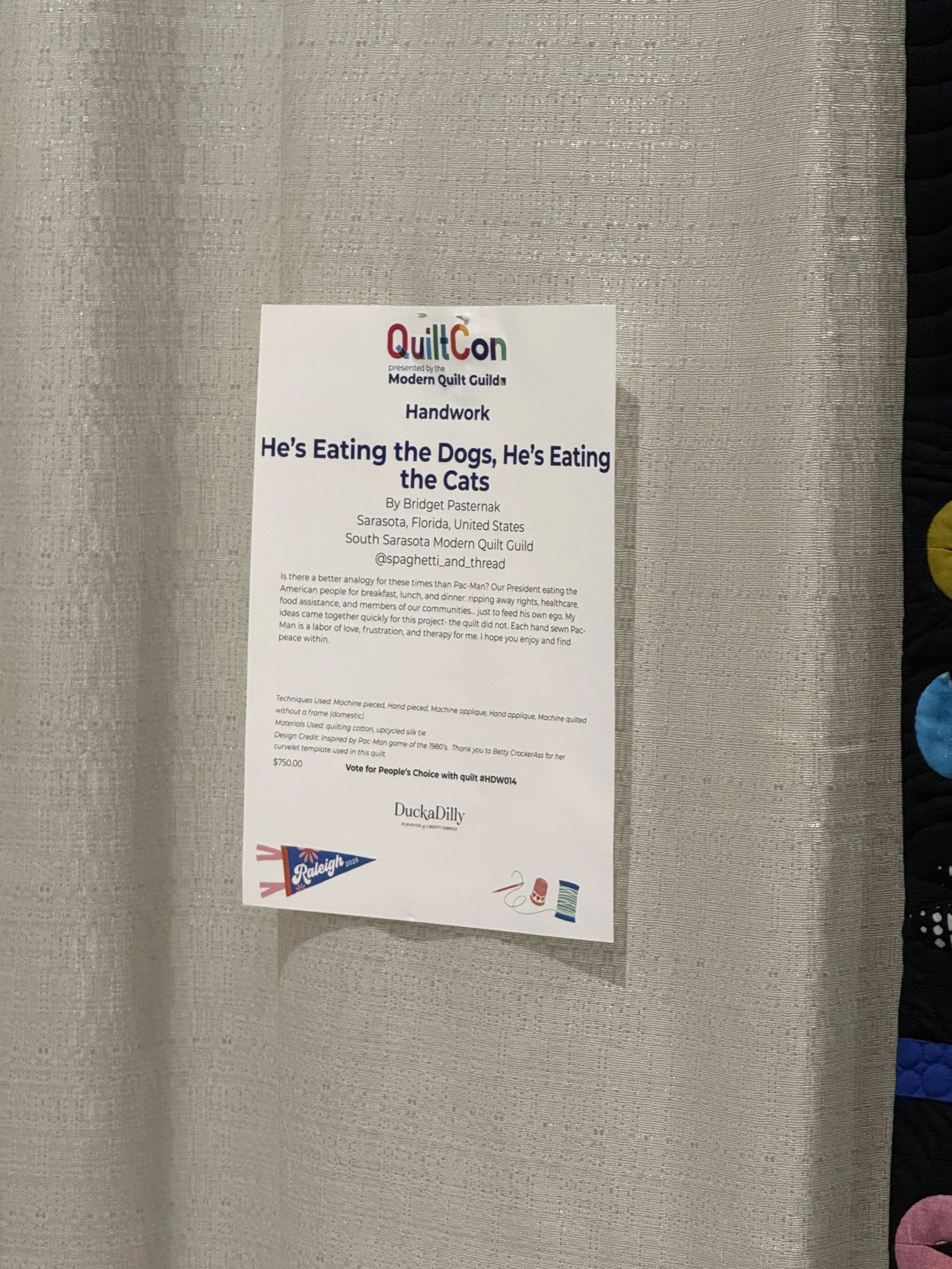
Quilting has a long and strong history of political participation. Quilt circles have long been places for women to exchange information, collaborate for social and political change, and express solidarity. QuiltCon as a show has an equally strong history of displaying quilts related to current, but, I was especially excited to see this year’s contributions.
I grew up holding tight to a set of beliefs about the world around me that would have disagreed with or even felt threatened by many of these quilts. I was quick to “other” people, I clung to a narrow worldview of religion and politics, and I thought the world was pretty black and white. My journey out of such narrow beliefs has overlapped with my journey into motherhood (another special thanks to all of y’all who came to my Why We Quilt: How Quilting Teaches Us How to Live lecture where I shared a bit of my motherhood journey). Having Jem and Ian opened up my world in ways I didn’t expect.
Becoming a mother challenged me to love bigger. To confront the harm that such a strict set of beliefs had done to me as a woman, adoptee, and queer person. To face and begin unlearning my white privilege. It showed me sonder. The concept of sonder is that every person is living a life as complex and vivid as our own. Becoming a mother showed me the sonder of my children, but that quickly rippled outward and gave me a renewed curiosity, compassion, and delight about all the people I’d once flattened in the name of my limited beliefs.
I am still a person of faith, but my relationship with organized religion/ church is really complicated. It turns out that Jesus always prioritized the edges of society, cared about inclusion and love more than rigidity, and had far harsher words for those pursuing power than for those pulling up chairs to the table. In fact, one quilt in particular (“I Sat,” shown below), almost immediately reduced me to a puddle of tears.
One of the hardest things of the last decade has been watching many of the people I love dearly, women and men who raised me in church and school, continue to cling to a narrow, exclusive view of the world. I grew up on (and let’s be honest, still maintain) a steady diet of CS Lewis and JRR Tolkien. Robert’s beautiful rendering of Lewis’s quote about grief hit me right in the place that is still the most tender.
All of this to say, I was grateful for each of the makers who took the time to share their own complex thoughts, experiences, and beliefs at QuiltCon. Each felt like a hug or a squeeze on the arm as we navigate current events, and each one asked me to consider not only my own relationship with the world but to consider the experiences and perspectives of others, too. That is the whole point of art, and y’all did a gorgeous job.
Re-Explorations
As I mentioned above, parts of this show reminded me clearly of my first QuiltCon in Savannah in 2017. I know the modern quilting movement is absolutely allergic to the word ‘derivative,” but all art is connected, and I was delighted to see these threads of connection in Raleigh.
(Each quilt on the far right in the set of three is from 2017. I’ve listed the titles and makers below)


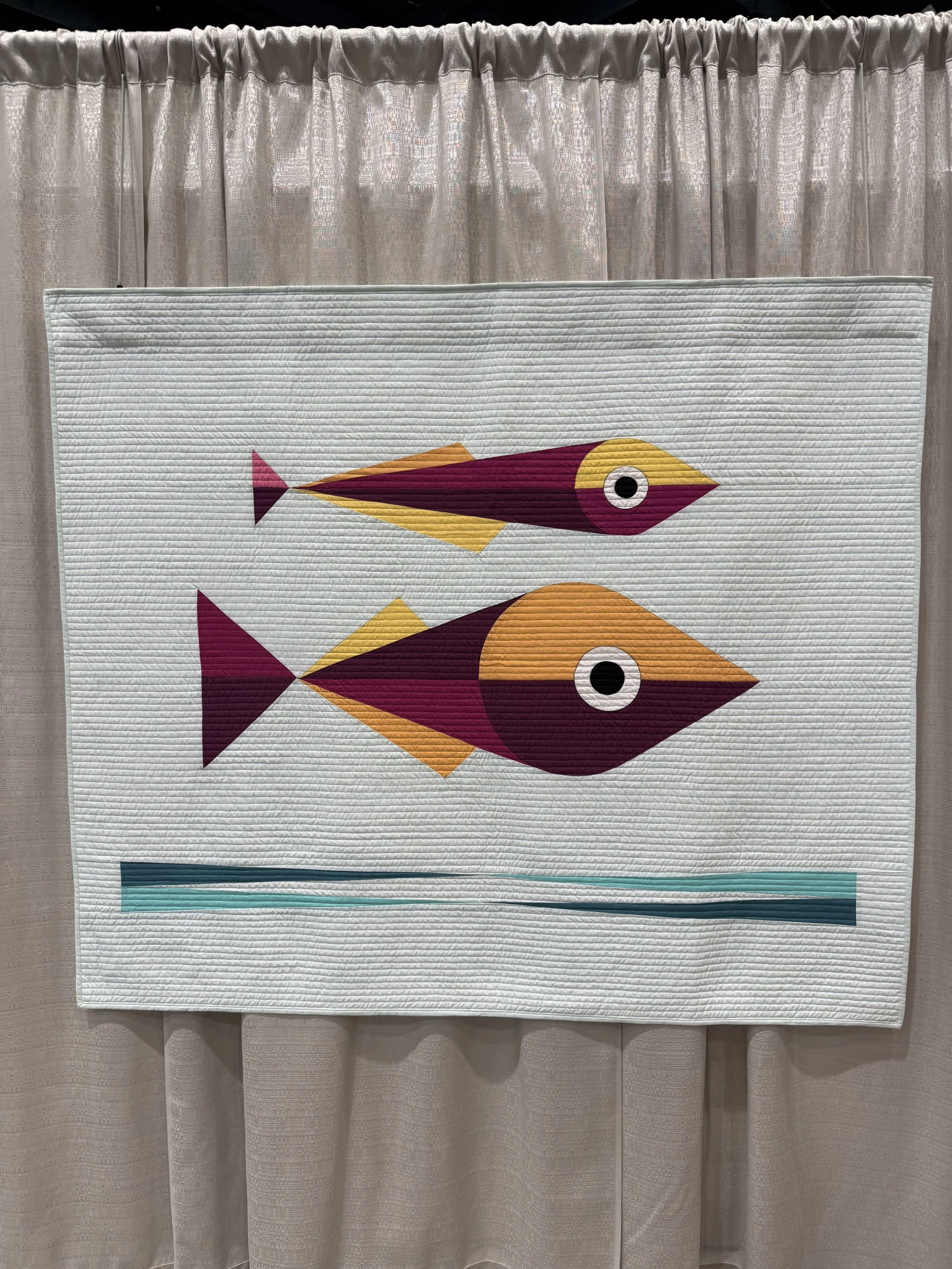



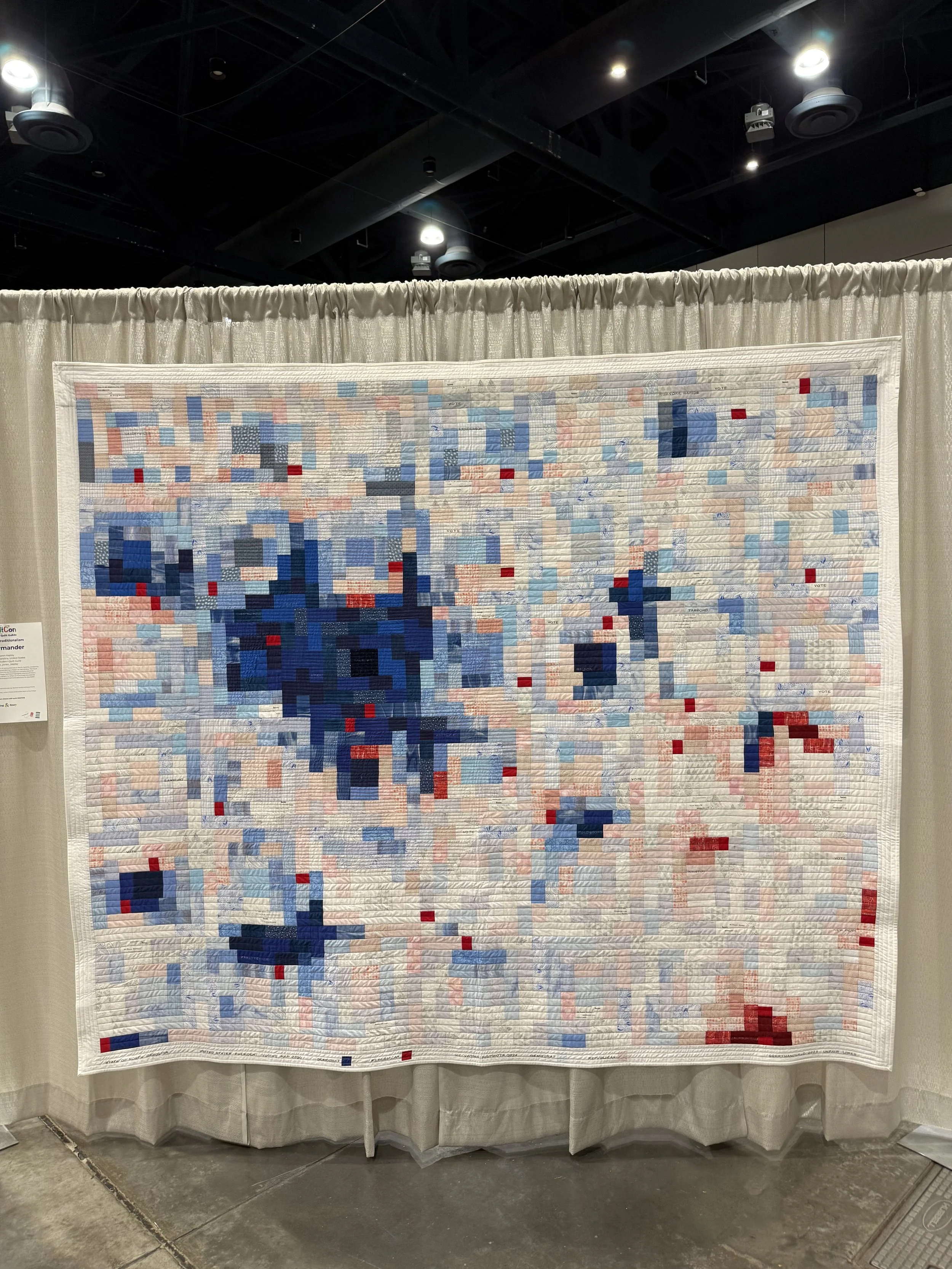

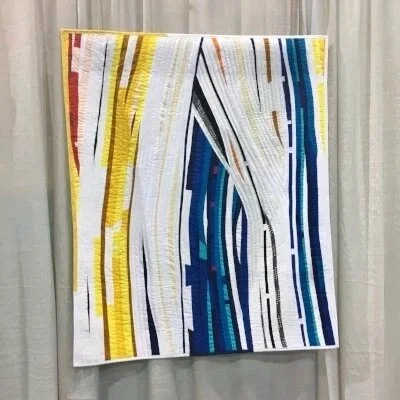
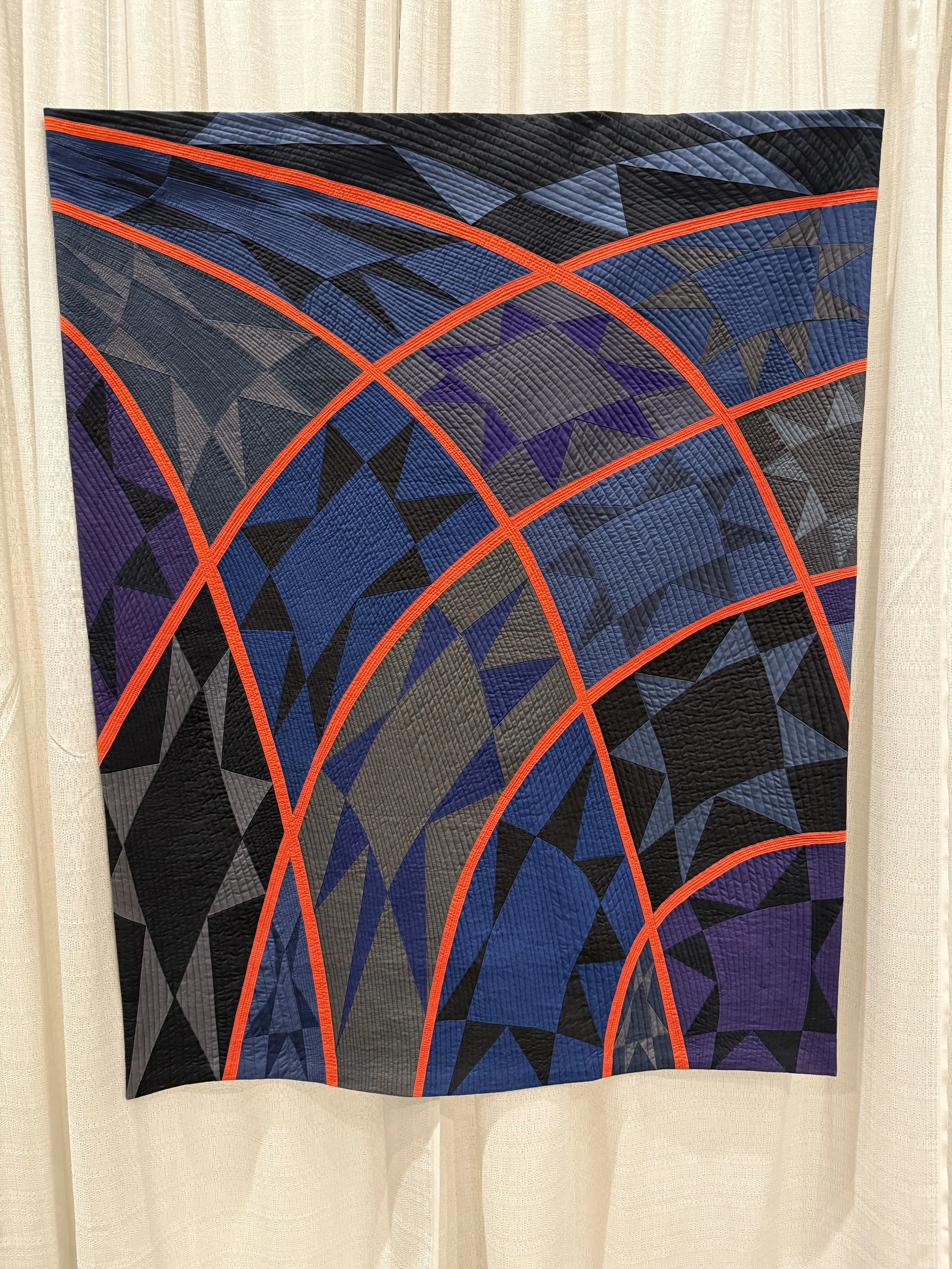


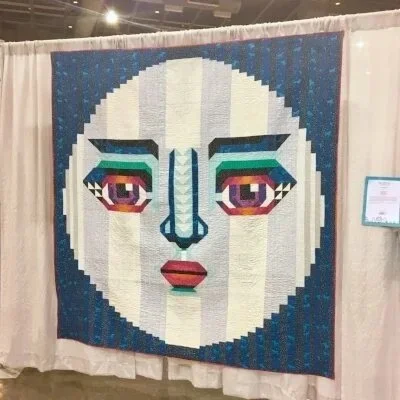
Alberta Sky Quilt by Calgary MQG
Folksy Fish by Sarah Sharp
I Love Lobstah by Shelley Brooks
Rails by Michelle Wilkie
Warp & Weft by Cheryl Brickey
Moonie McMoonface by Melissa Averinos
I love threads of connection because it shows us how creativity circles back. In each of these quilts, the artist was exploring a similar theme from a slightly different angle. But we also see the technical advancement of the modern quilting movement over the last decade. There are more curves, sharper corners, a wider variety of techniques, and more precision in this year’s quilts. Technical growth is an important part of a creative movement.
But the retrospective energy (even if unintentional) was also comforting as a viewer. It’s a tender reminder that we can grow and evolve without pulling up all the roots. These pieces felt anchoring to me.
Show Stand-Outs
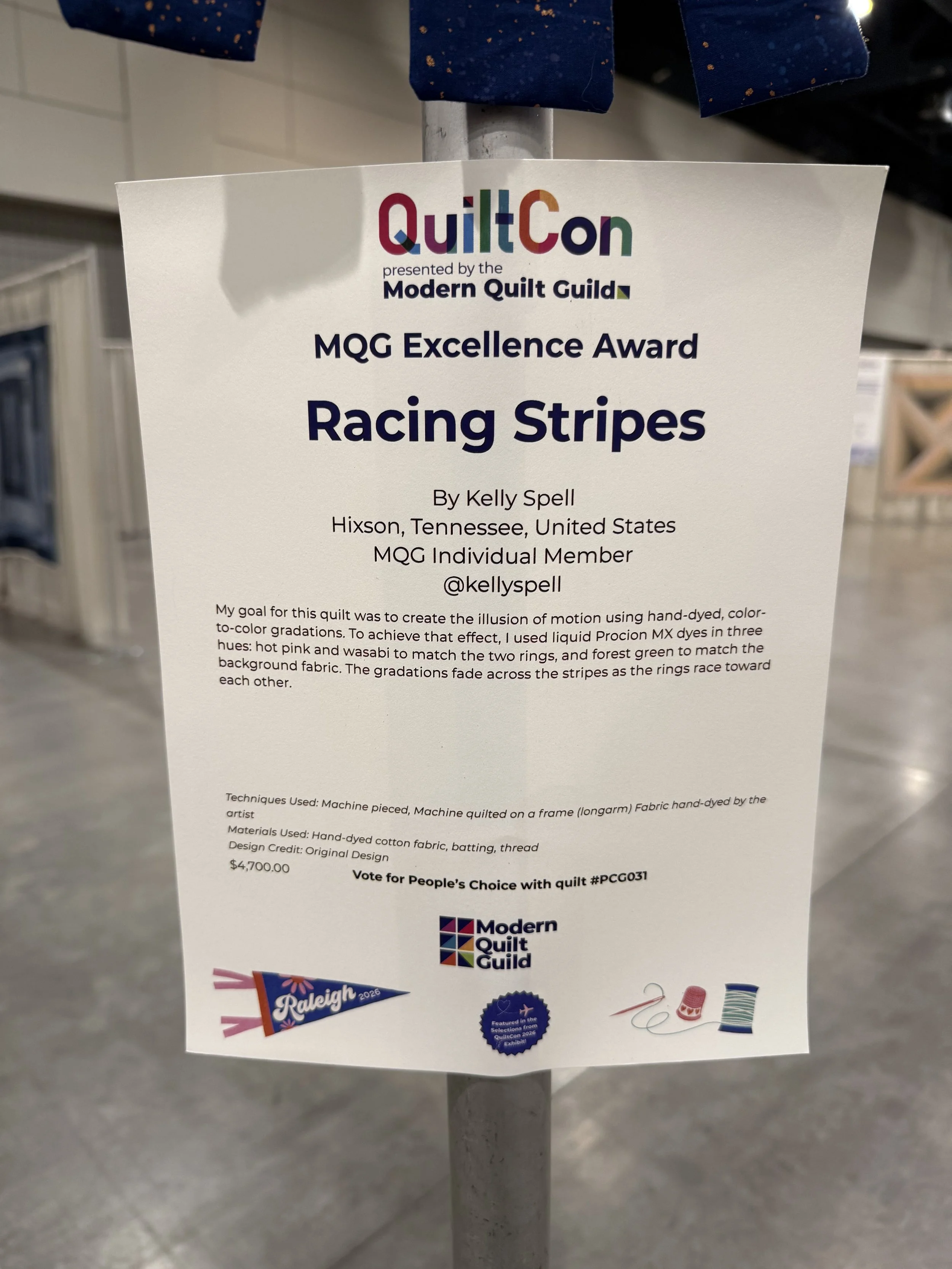
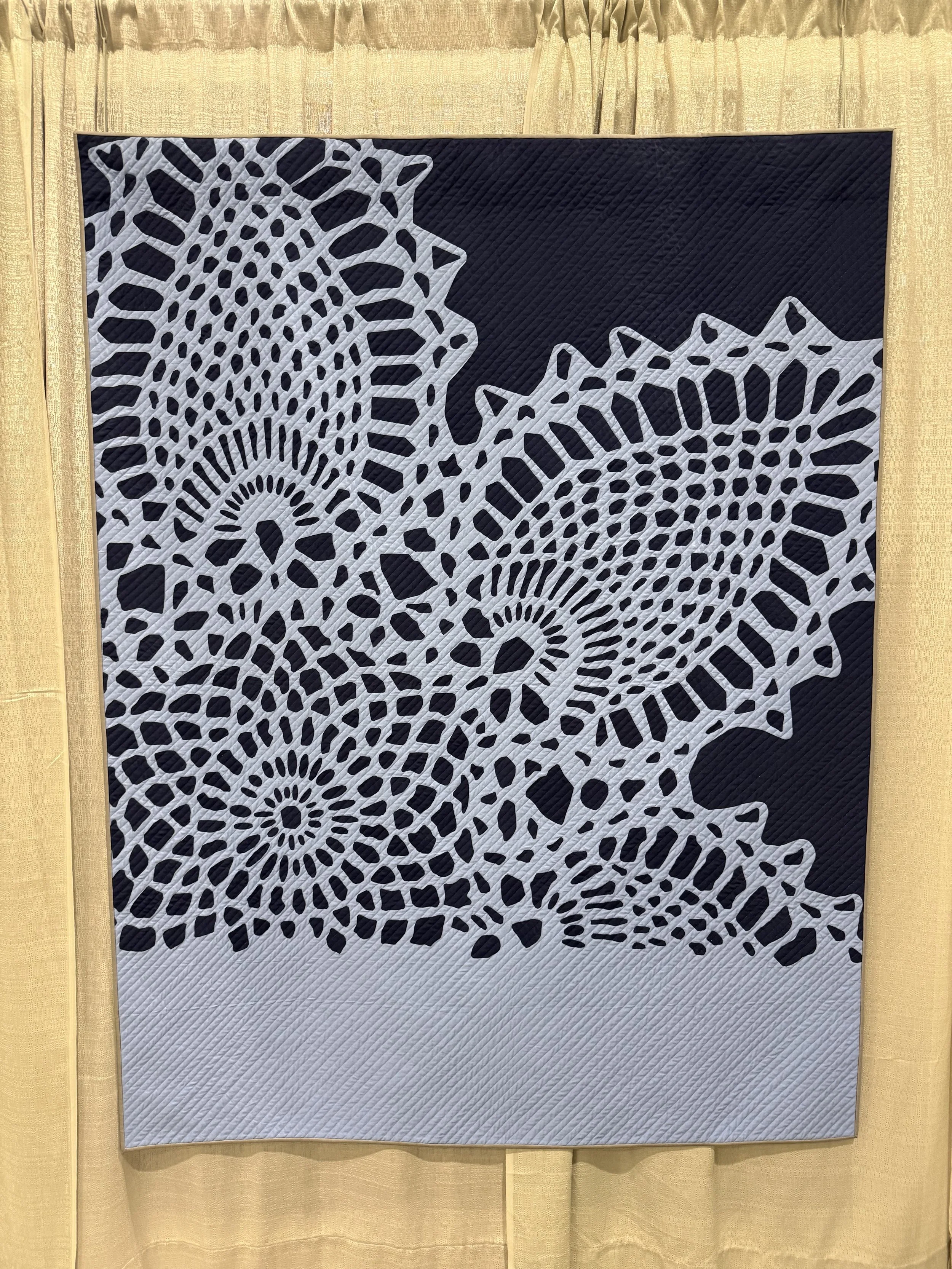
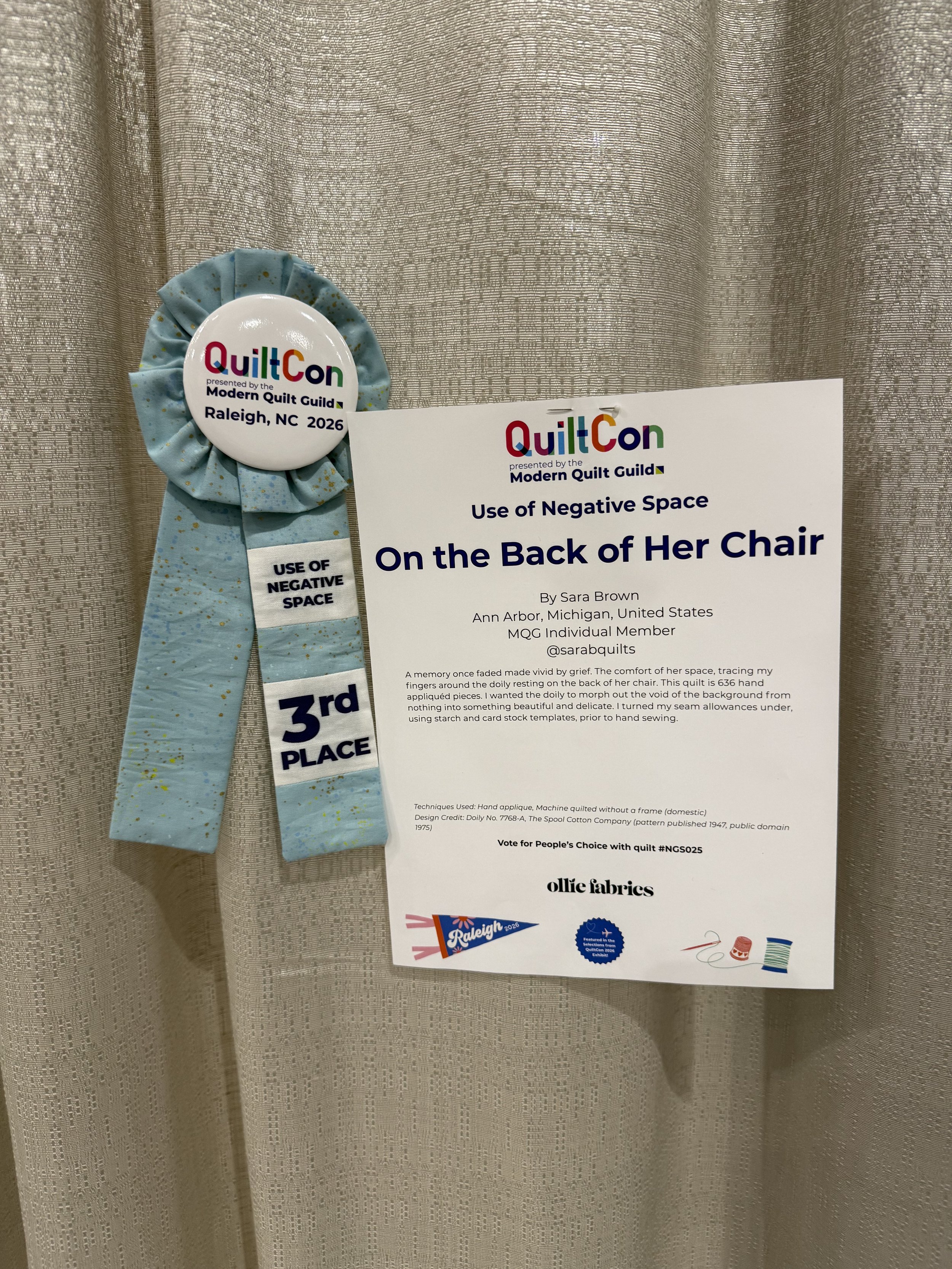
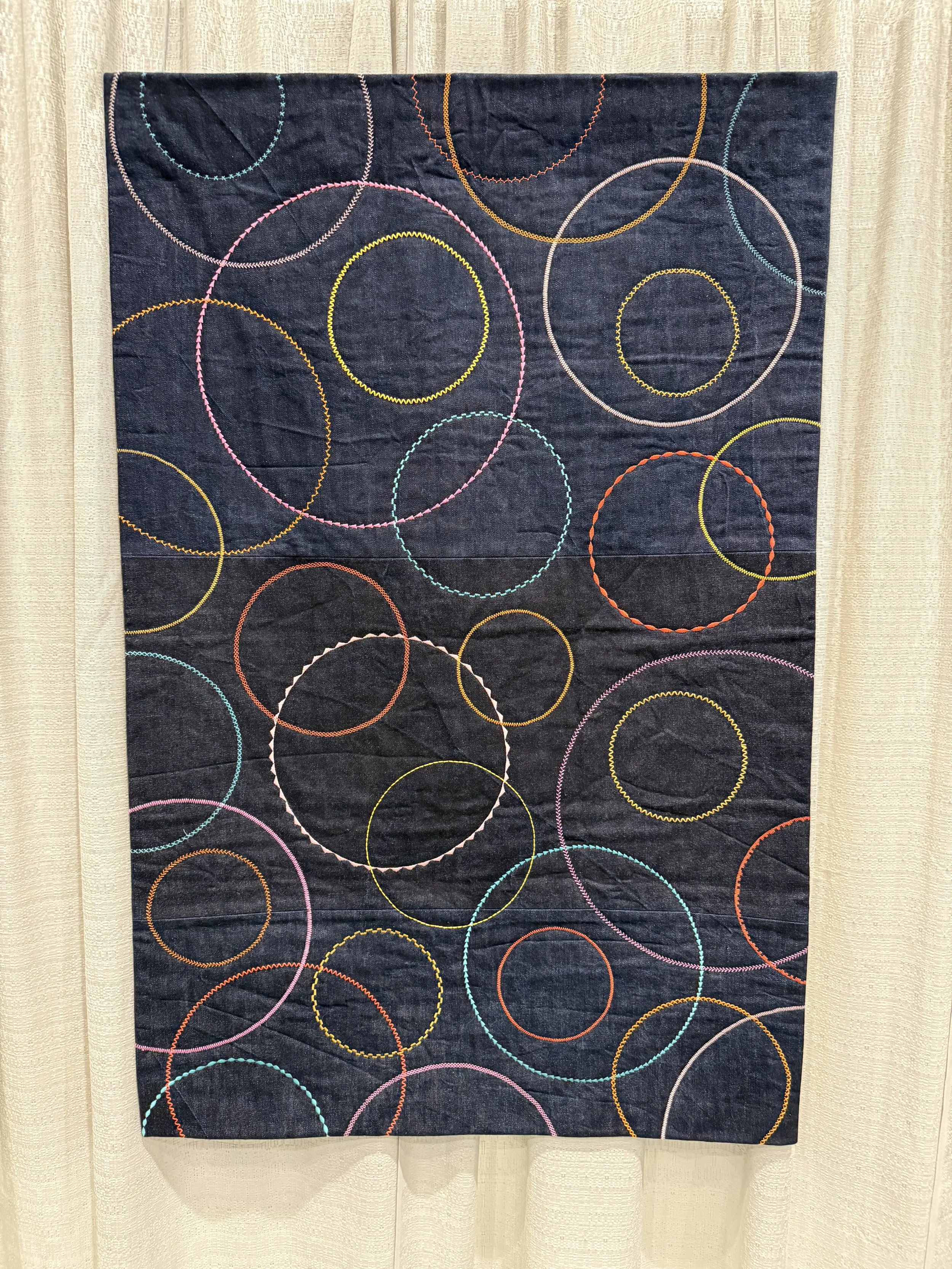
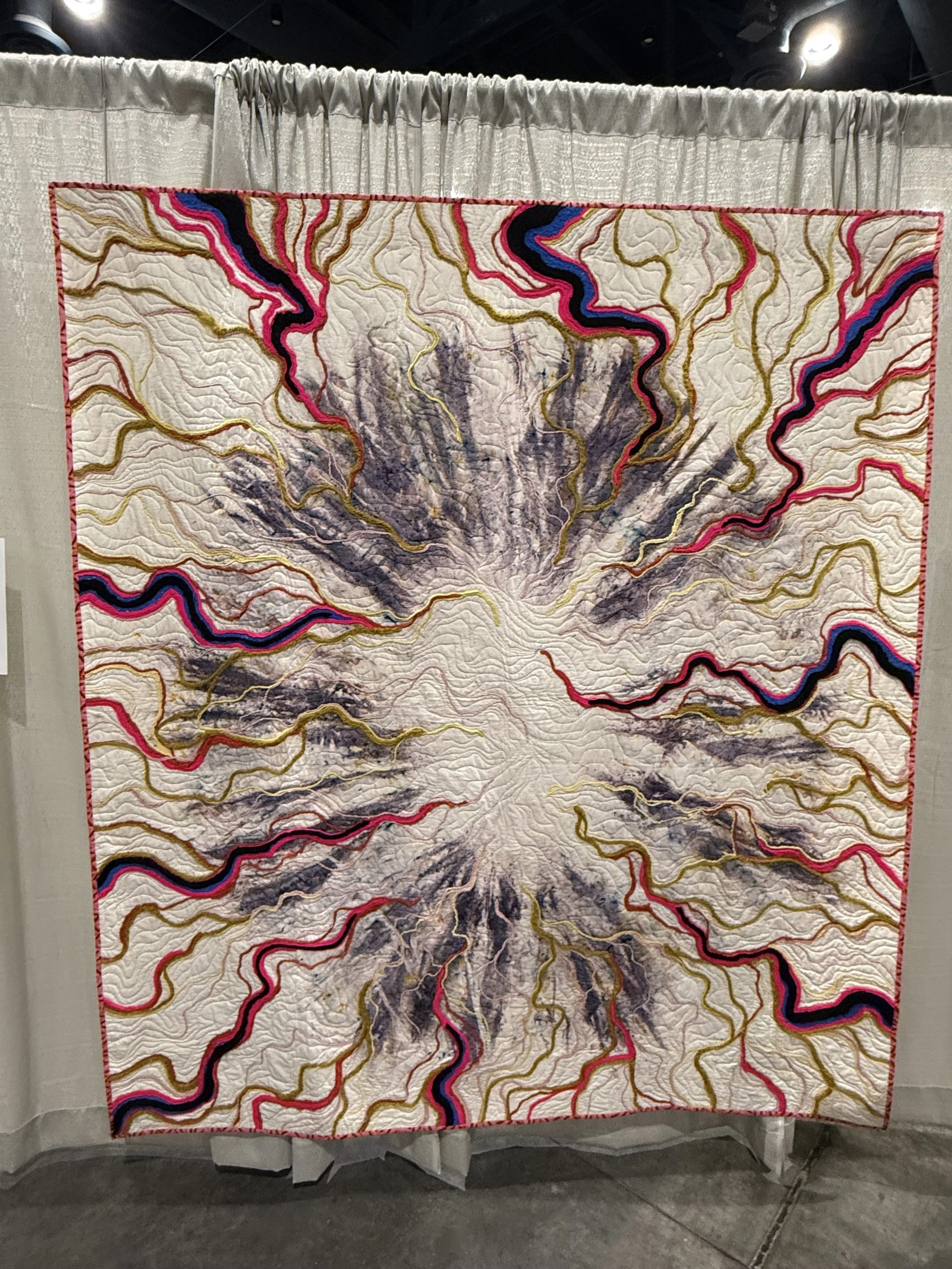
These quilts made me crooked smile with their cleverness and creativity. To me, they showed yet another evolution in progress among modern quilters. There are still many traditional techniques that we have only partially incorporated into the modern space, and these quilts nudged us forward again by playing with dye, applique, raw but not raw edges, couching, and more.
I also included Witches Sabbat because I’m curious to see when the modern movement will create space for more discussions about faith traditions. We are as diverse in our religious and spiritual convictions as we are in any other “bucket,” and I would love for us to learn from and honor each other in this facet as well.


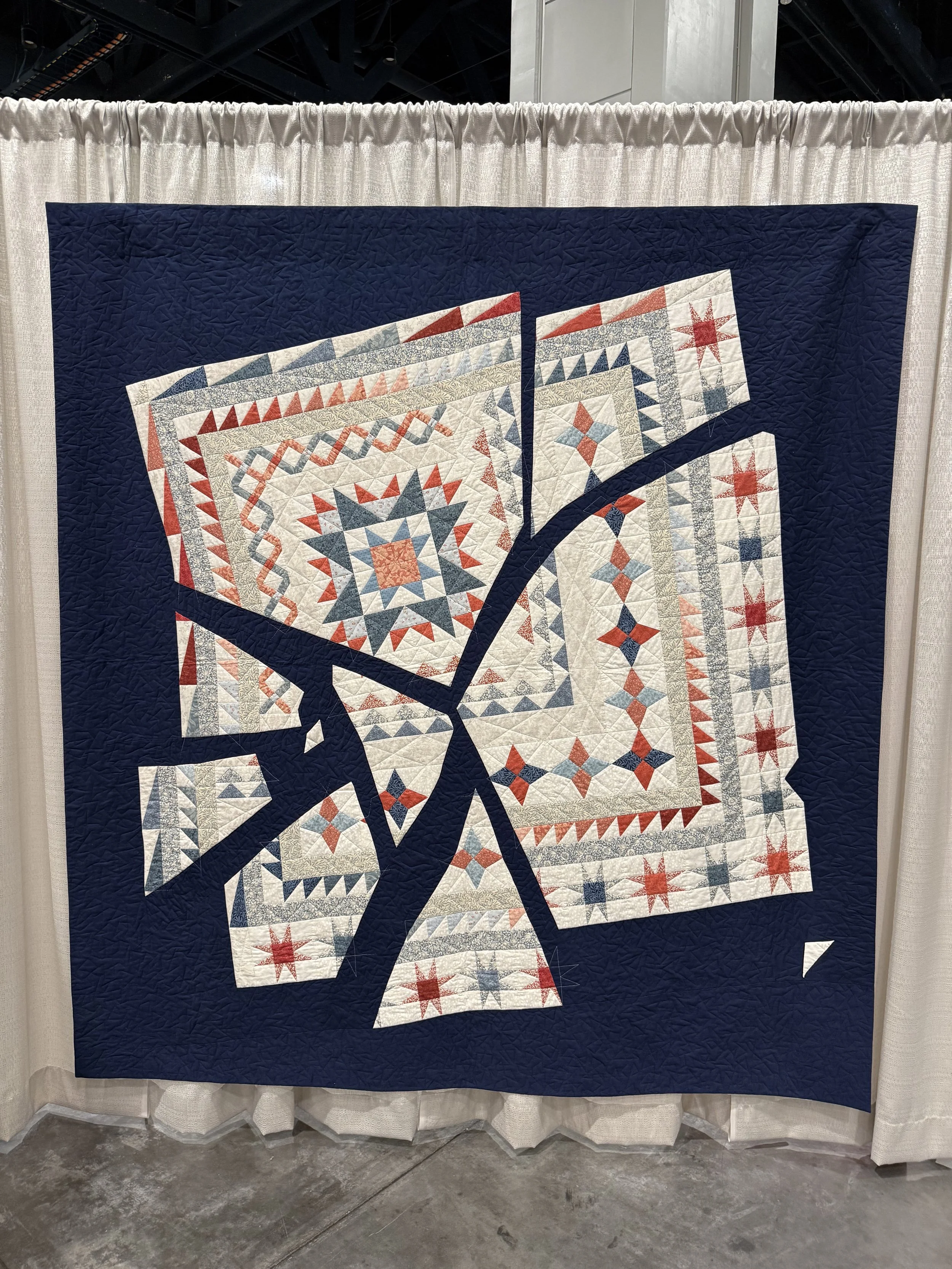
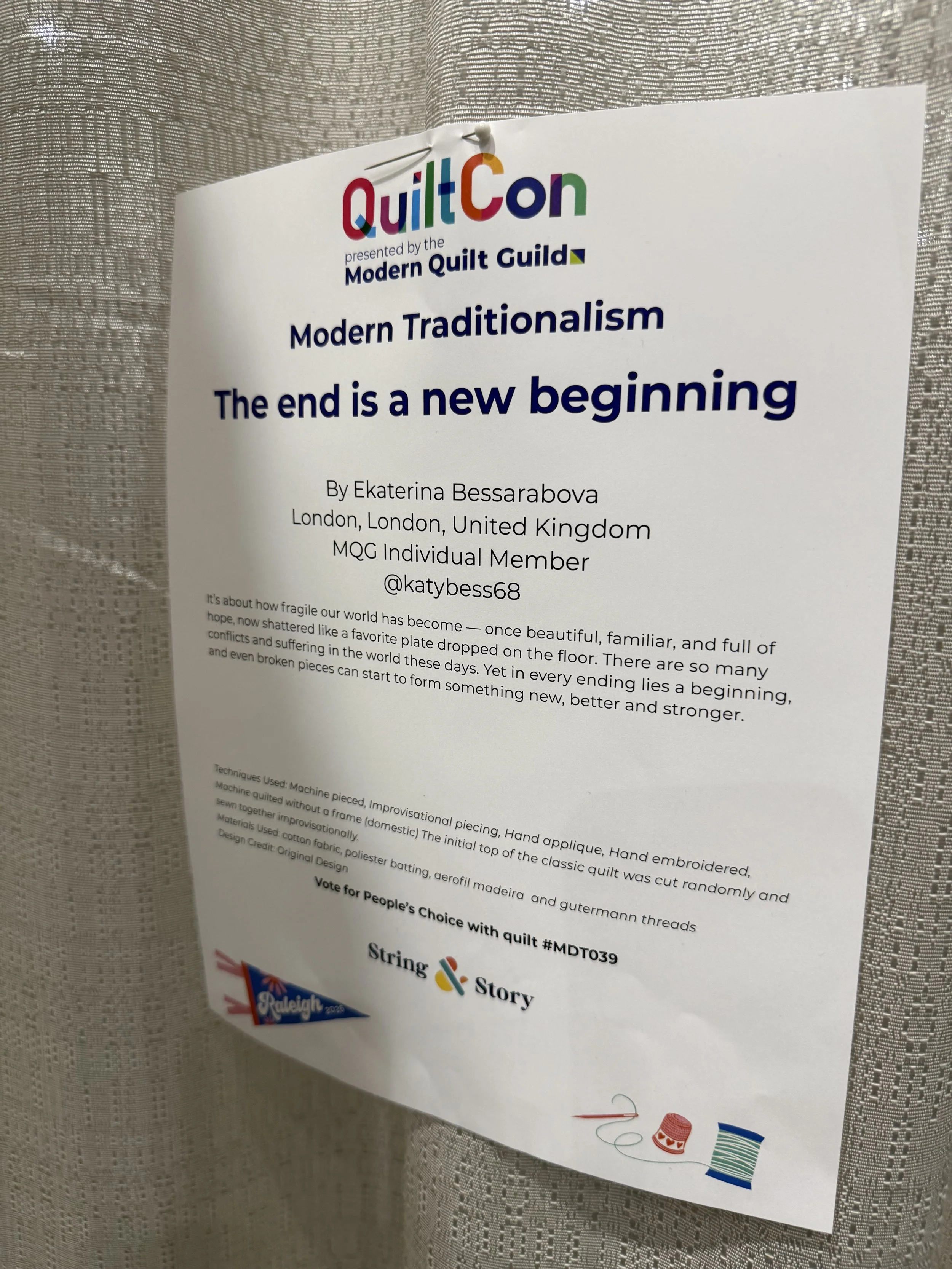
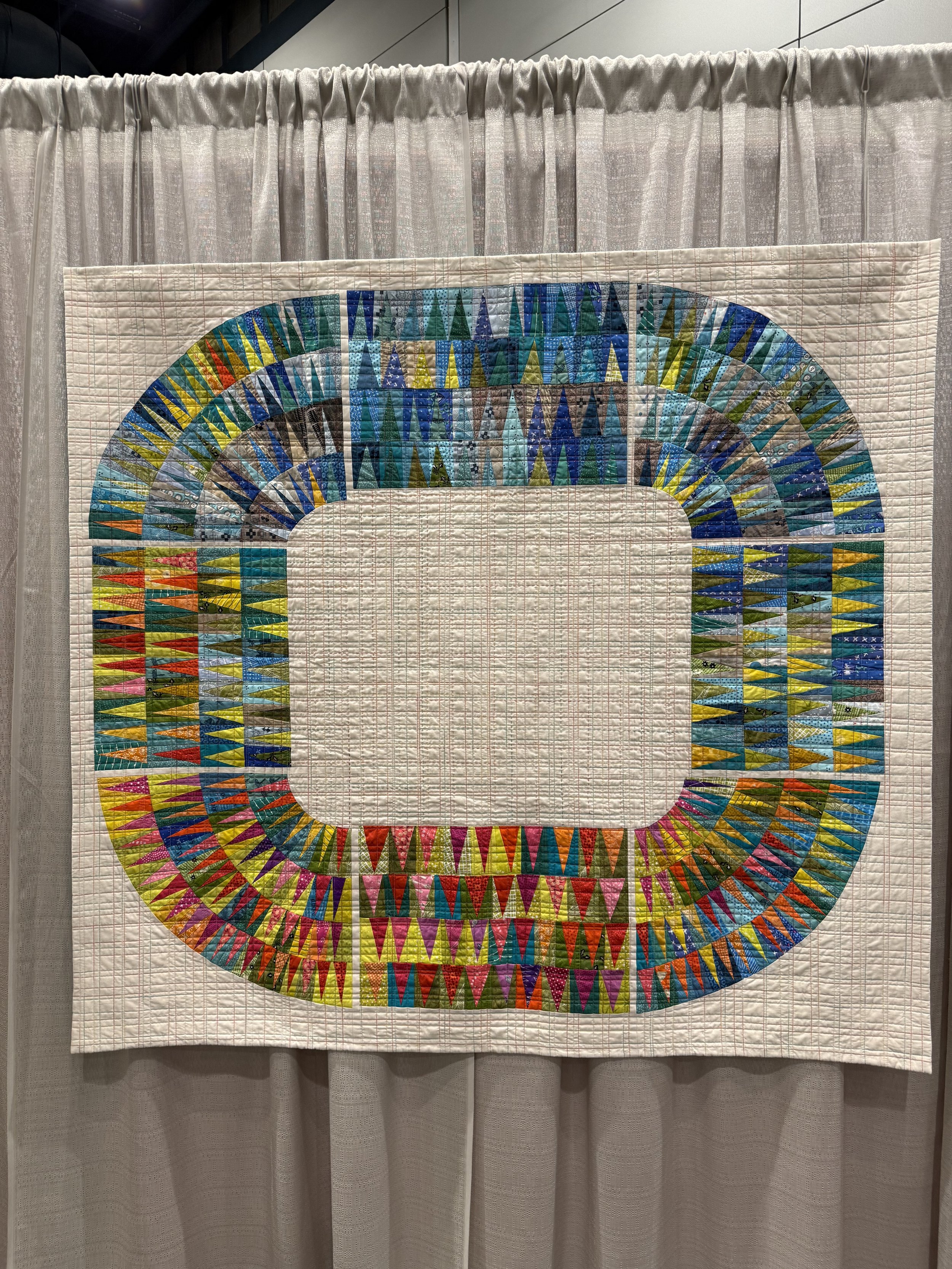
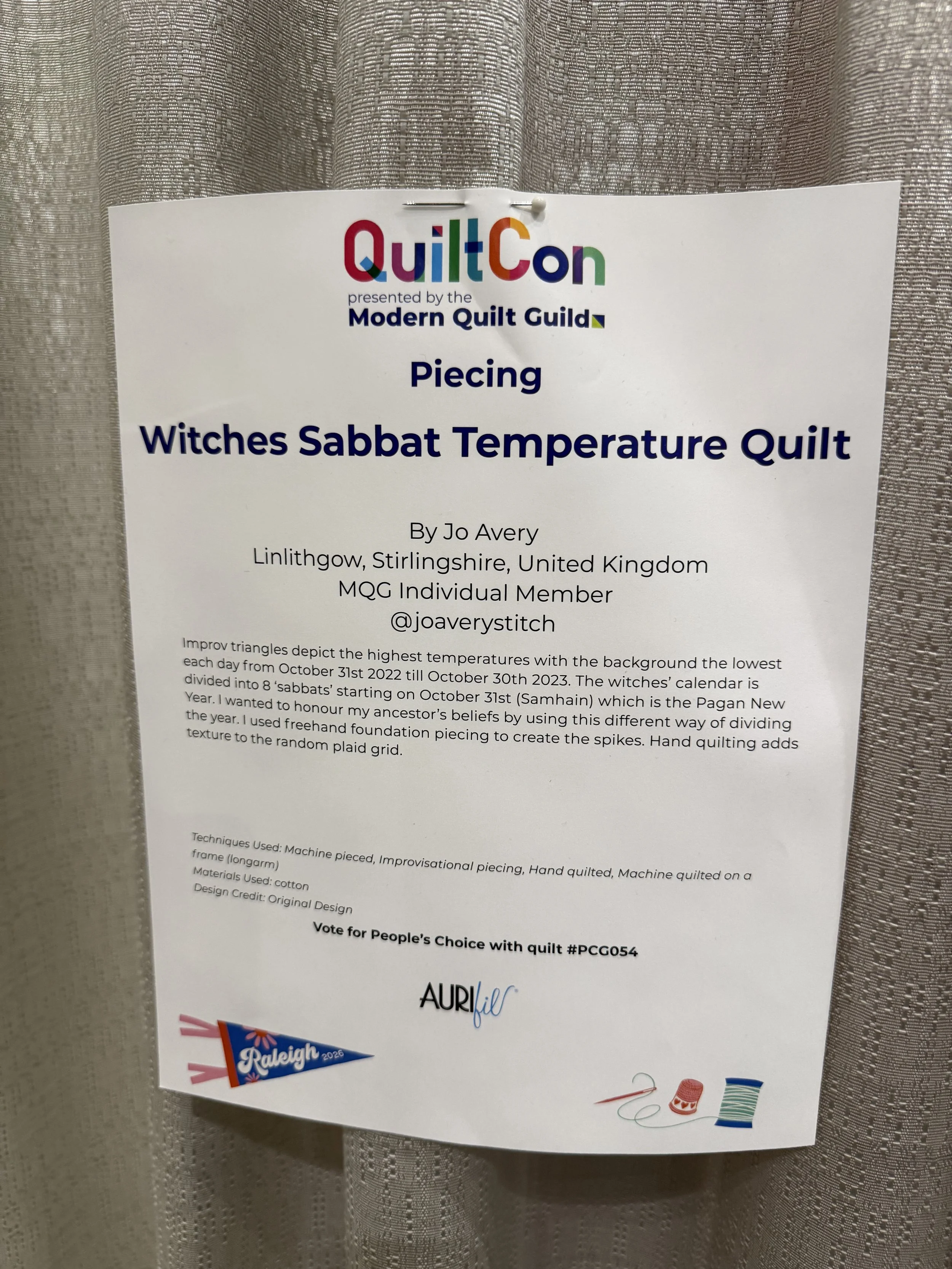



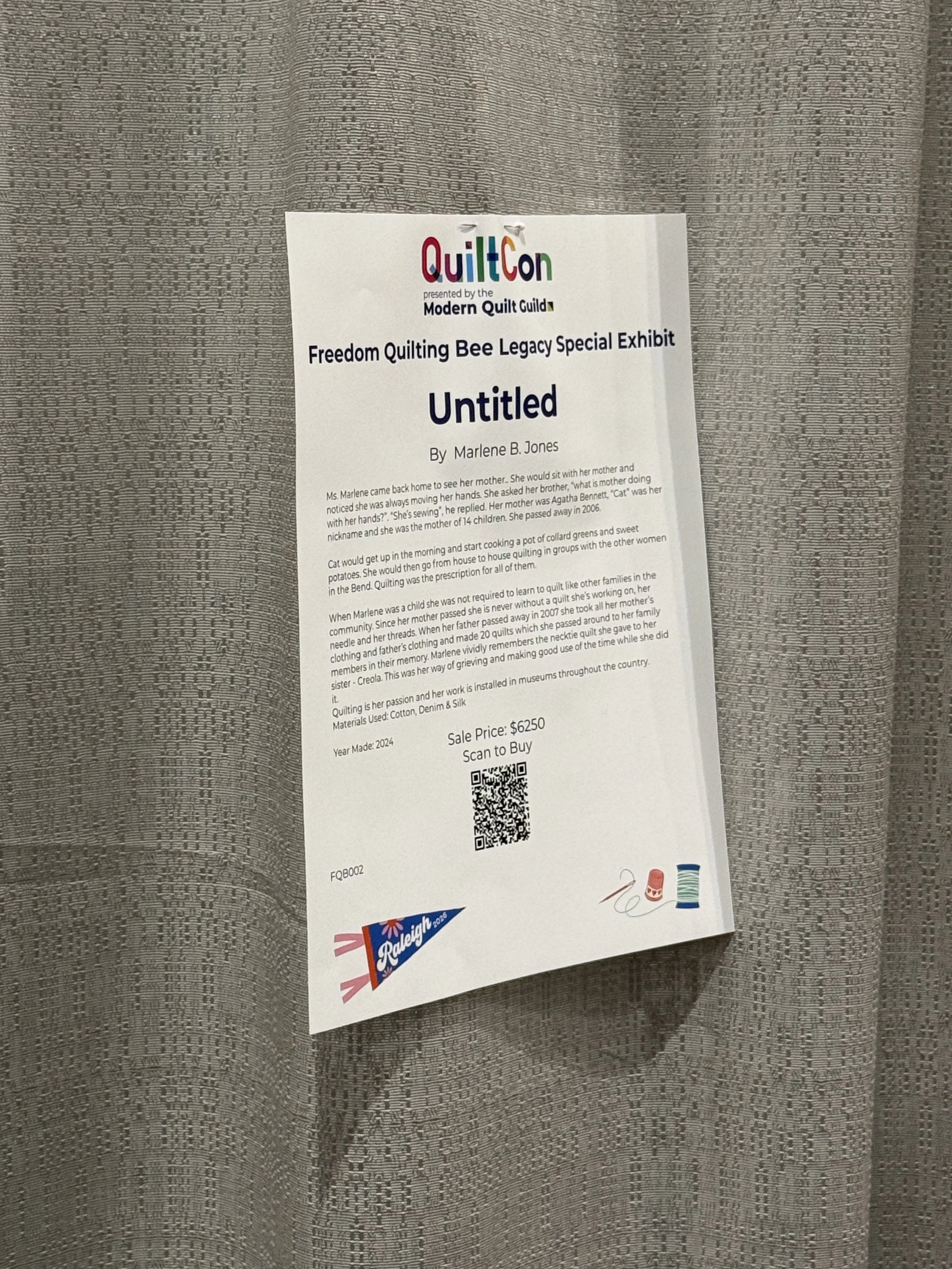
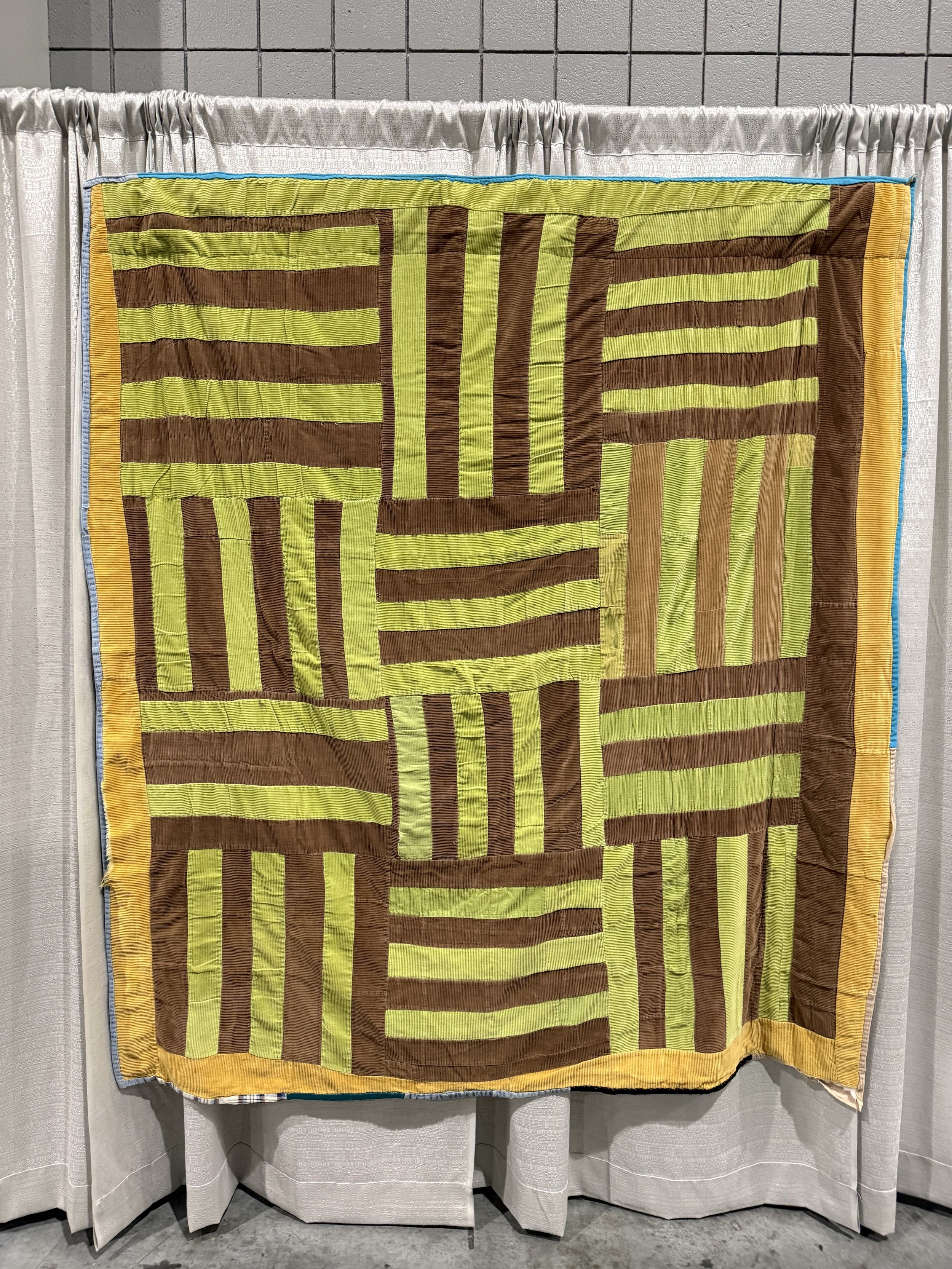
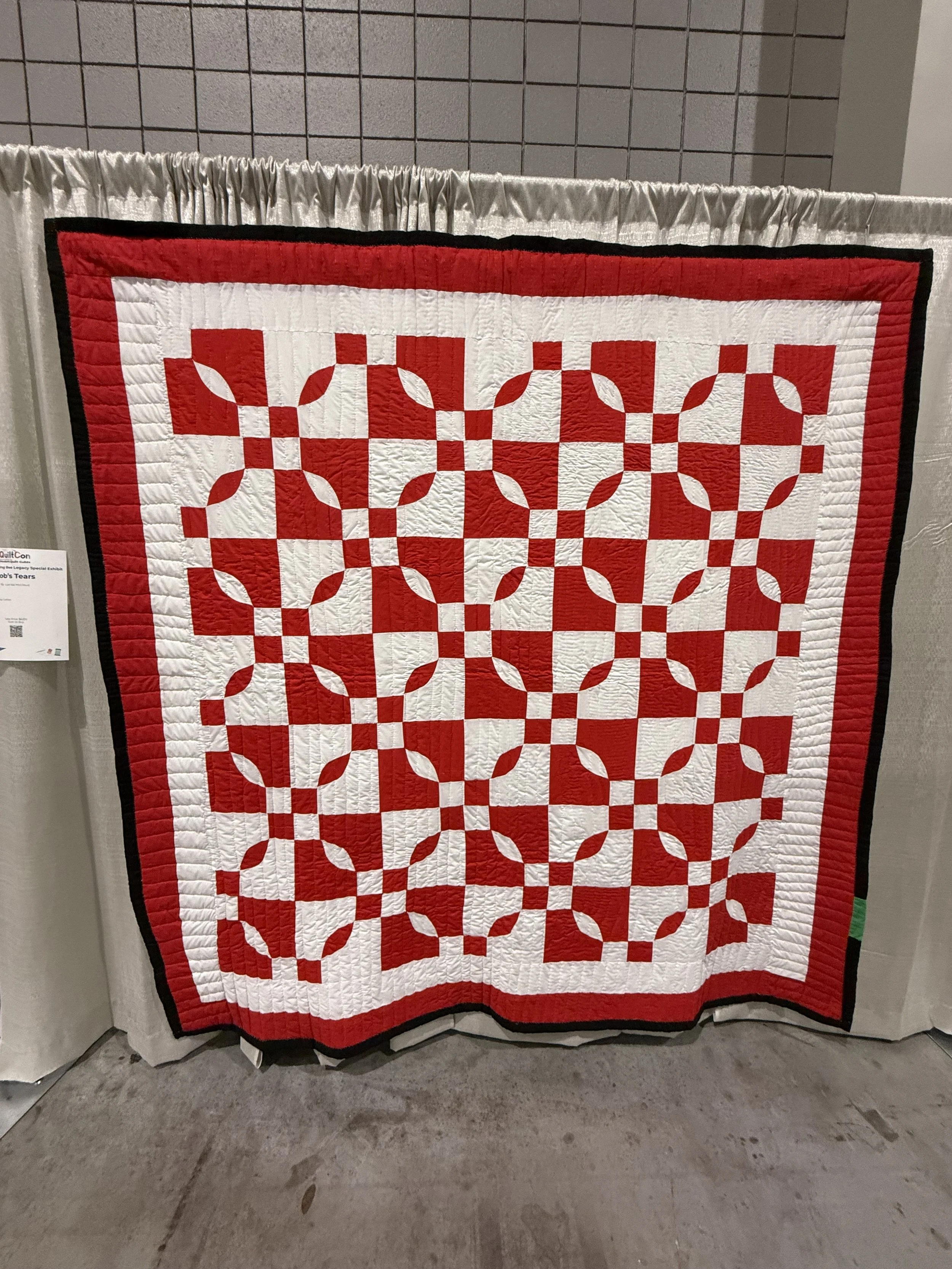
Gee’s Bend
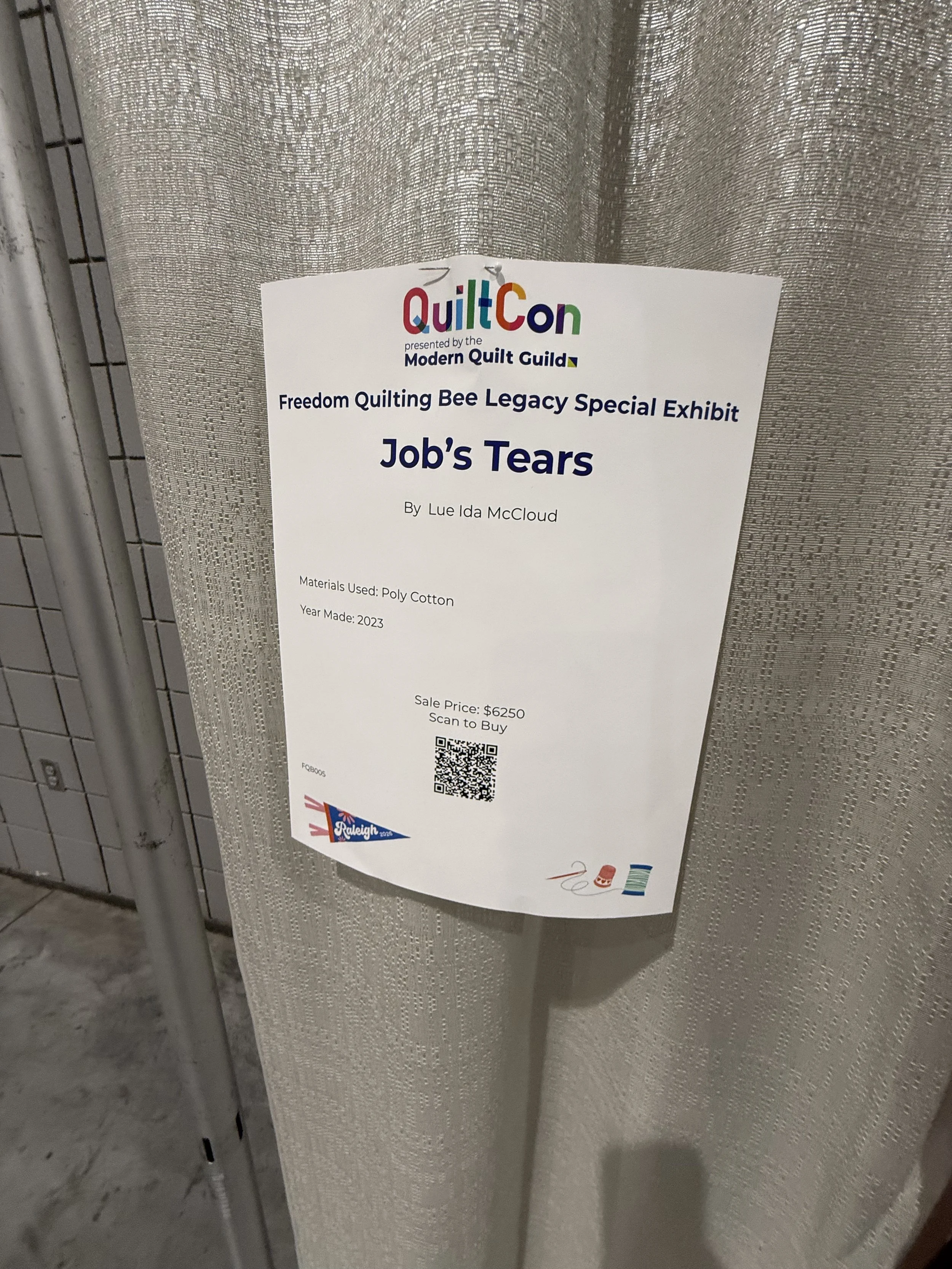
Gee’s Bend is an isolated, rural community of mostly Black folks in Alabama. The quilt makers of Gee’s Bend have become world-renowned for their bold, heartful creations. What an honor to see them up close at QuiltCon this year!





Industry Reflections
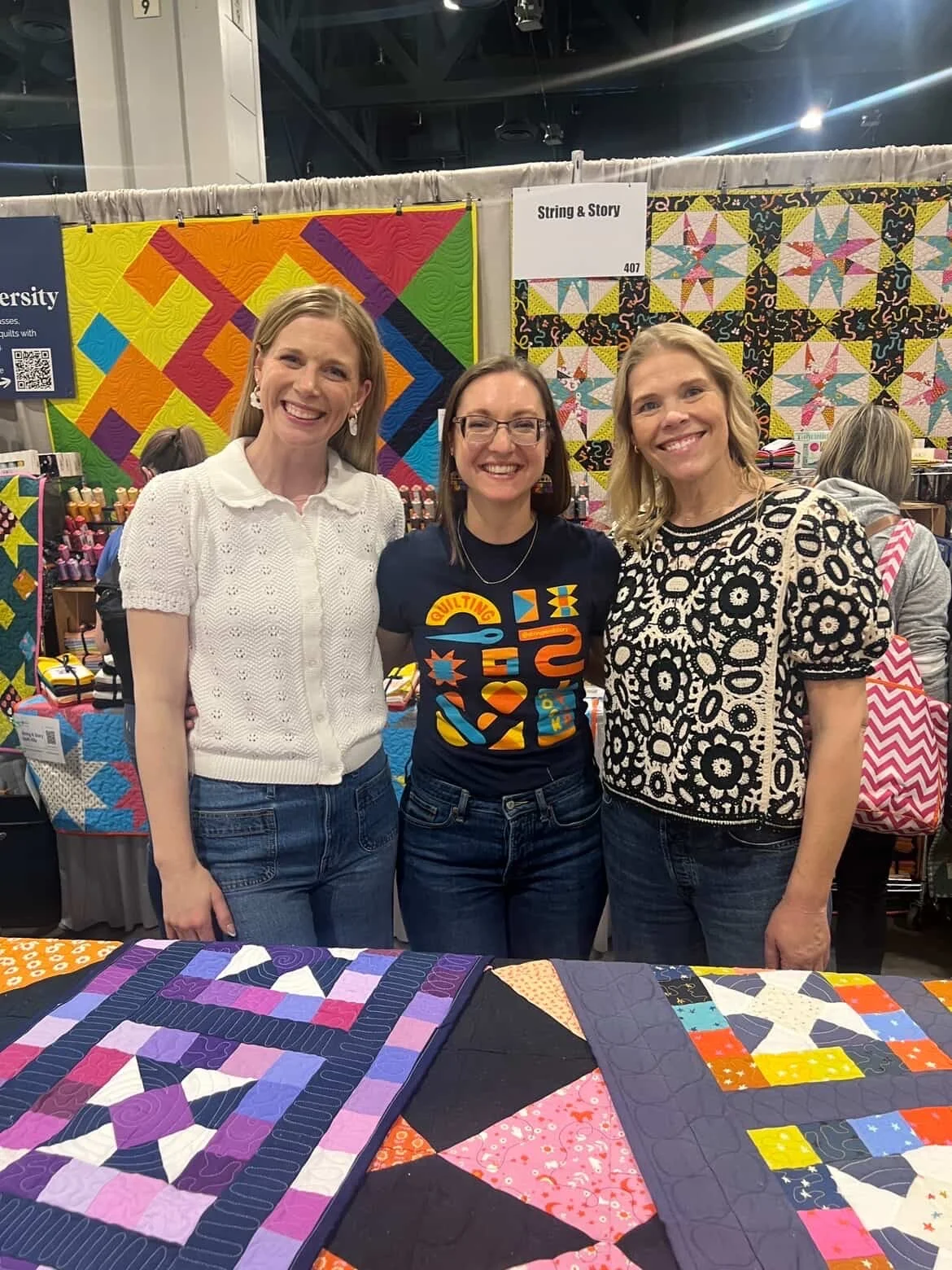

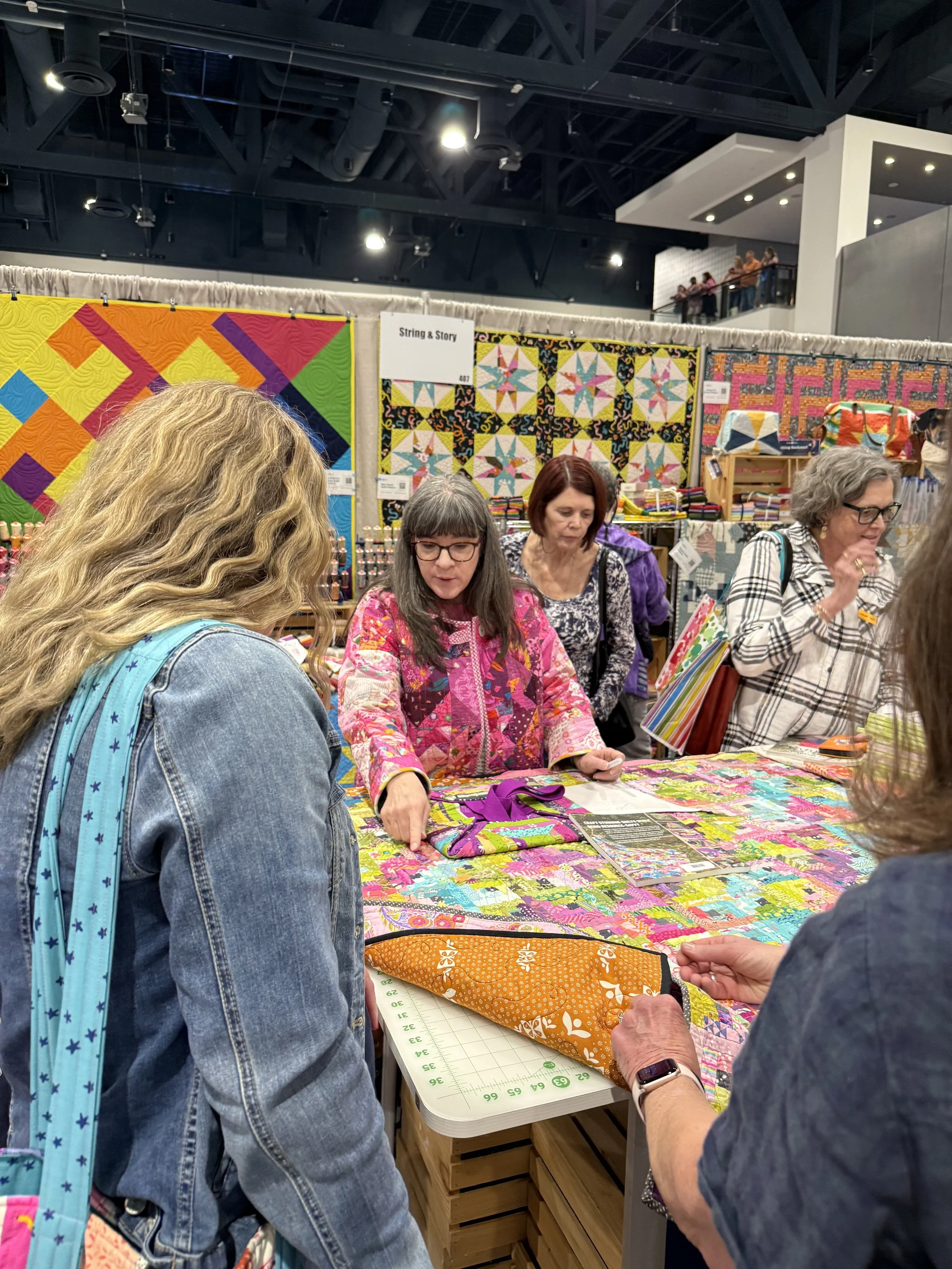


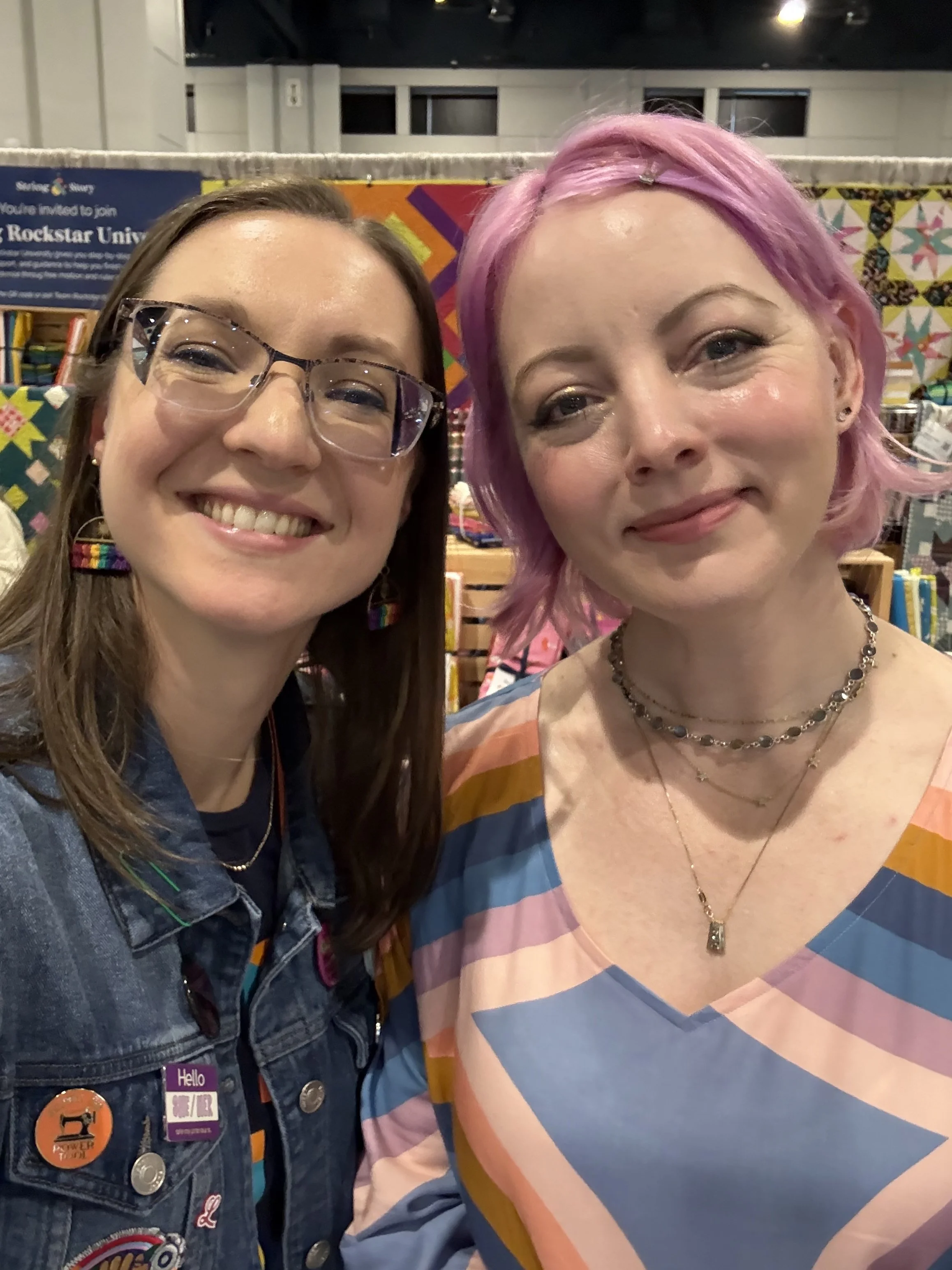


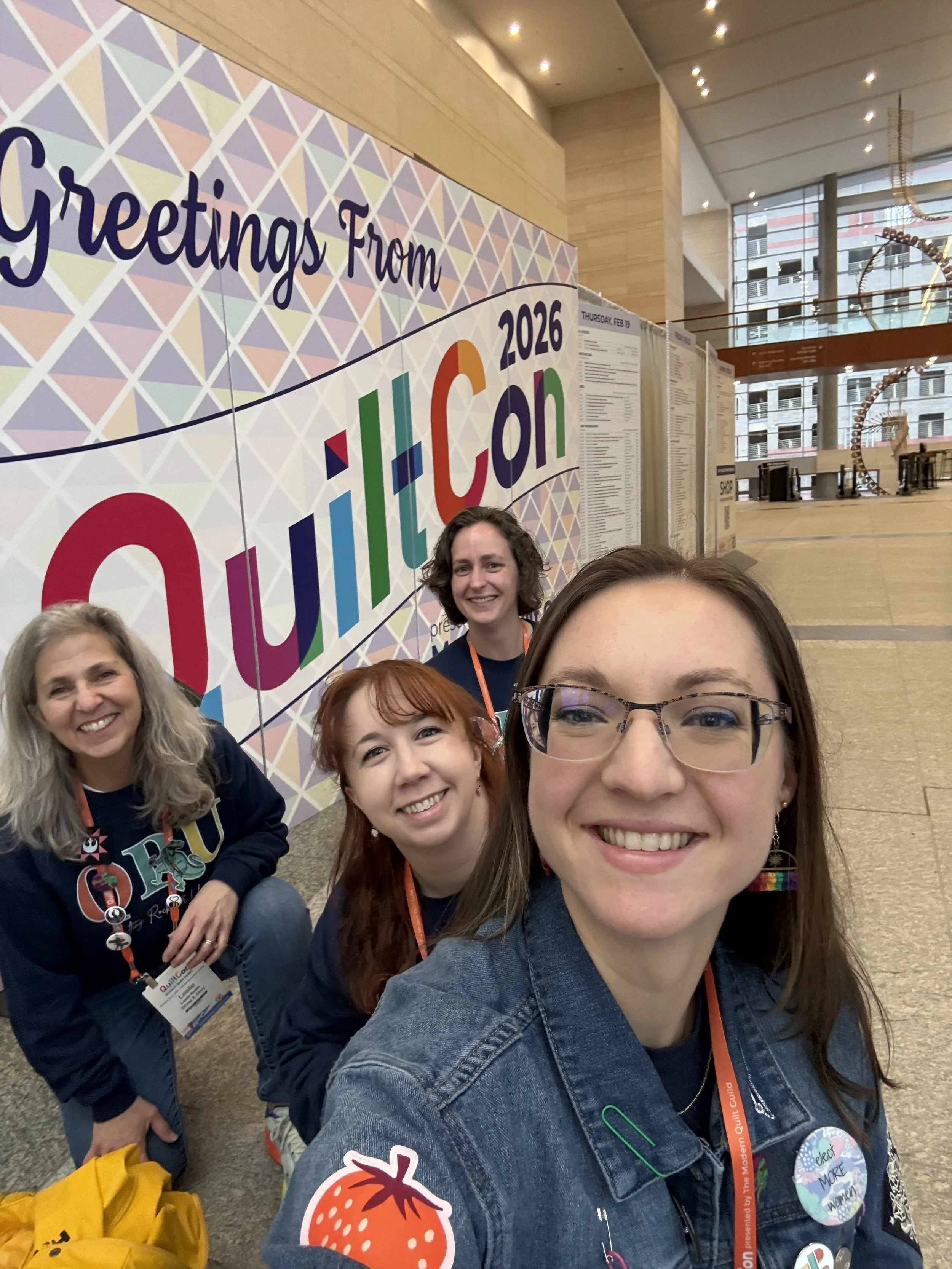
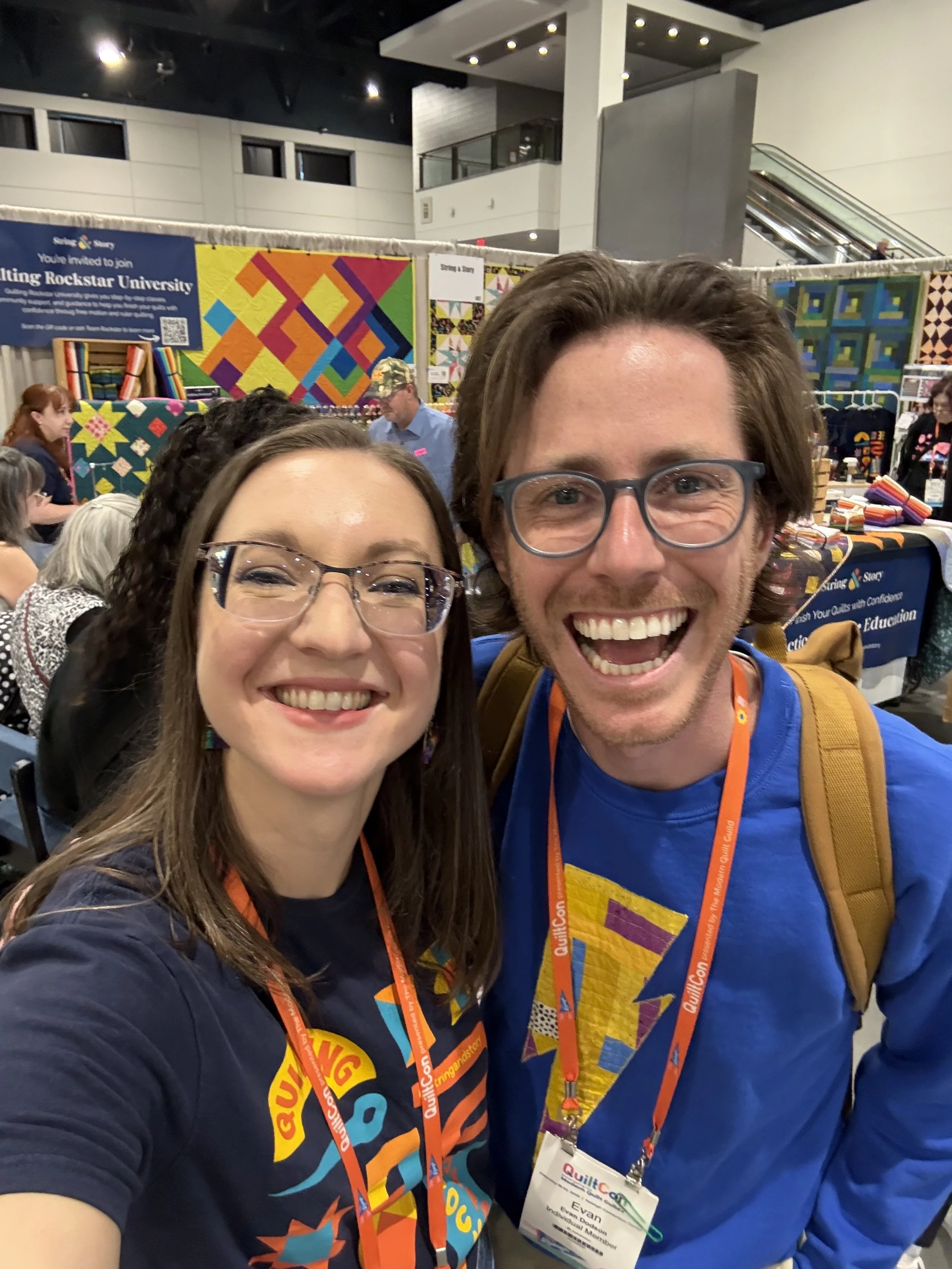

I spend a lot of time thinking about how quilting binds us together as a community. I most often talk about it in the context of String & Story’s Quilting Rockstar community. We represent every state, nearly 100 countries, and a whole kaleidoscope of cultures, skin tones, faiths, gender identities, and more, and I love how quilting gives us a common “language” to share so that we can get to know and celebrate each other. This energy showed up BIG TIME at QuiltCon.
I’ve also been thinking a lot about industry structure. The quilting world relies heavily on the creative design, teaching skills, and emotional labor of women. Many of us are solopreneurs or small business owners. And historically, there’s been a decent amount of competitive energy between designers, business owners, etc. Too often, customer attention and revenue gets treated like pie to be divided.
If you’re not a professional in the industry, it might interest you to know that quilting generates about $5 billion annually. That may sound like a big “pie,” but let me tell you, not a single designer or small business owner I know has anything like a slice of $5B sitting in the bank. The reality is that the VAST majority of quilting revenue is controlled by large corporations (think machine companies and fabric houses). These are the very companies that depend on the work of the (mostly) women I mentioned above. And yet, it is still not standard practice to compensate designers/ teachers/ influencers for the quilts they make, content they film, etc (product + exposure is not proper compensation).
Collaborative energy has been growing between designers/teachers/influencers for as long as I’ve been in the industry (10 years), and it was at an all time high at QuiltCon 2026. And, for someone who grew up hating group projects, I am OBSESSED with building new collaborations whenever I can, introducing creators to each other and to brands who are positive to work with, and generally doing my best to keep pulling up chairs to the table.
Why? Because I don’t think it’s pie.
Treating money like “pie” breeds competitive energy and keeps money in the pockets of big executives and companies. Money is also called “currency,” meaning it is designed to flow like a current. I think the quilting industry will be stronger when we improve the way currency flows through it (kind of like heart bypass but for business?).
Ultimately, this means making it standard practice for designers, etc to be generously compensated for their content (directly and/or through affiliate programs, etc). And the increasing collaborative energy I’m experiencing and observing with my fellow designers/ teachers/ creators in an incredible way for all of us to ask more from the larger companies we work with, create stronger communities by reducing competitive energy and feelings of scarcity, and grow as business owners and industry leaders by learning from each other.
“A rising tide lifts all ships.”
Final Thoughts
I shared in my Why We Quilt lecture that my “original plan,” before Hubster and kids and quilting, was to be an Oxford don. Clearly QuiltCon feeds that ponderous part of my soul as well as filling my creative, social, and business owner buckets. Whether or not you were able to attend QuiltCon in person this year, I hope this recap inspires you as well, both by giving a window into the gorgeous quilts that hung in the show and by giving you some broader “real life” things to think about. Quilting is comforting and cathartic, but it is far from an escape from the rest of our lives. On the contrary, quilting is, indeed, a sandbox for living, and QuiltCon is a beautiful example of how all the parts of ourselves tie together.
Resources
BLOG: Read my previous QuiltCon recaps here
PUBLIC SPEAKING: Would you like to hear my Why We Quilt lecture? I would love to speak to your guild or group! I am also available for business-focused keynotes about finding your zone of genius, impactful collaboration, and more. You can reach out via my Public Speaking page here.
WORKBOOK: My main job is to help you finish your quilts, even if you’re currently terrified of your longarm quilting machine or domestic free motion quilting foot. I can help you get started and quilt your first with confidence with this free workbook.