
How to Make Lumber Jane Scrappy
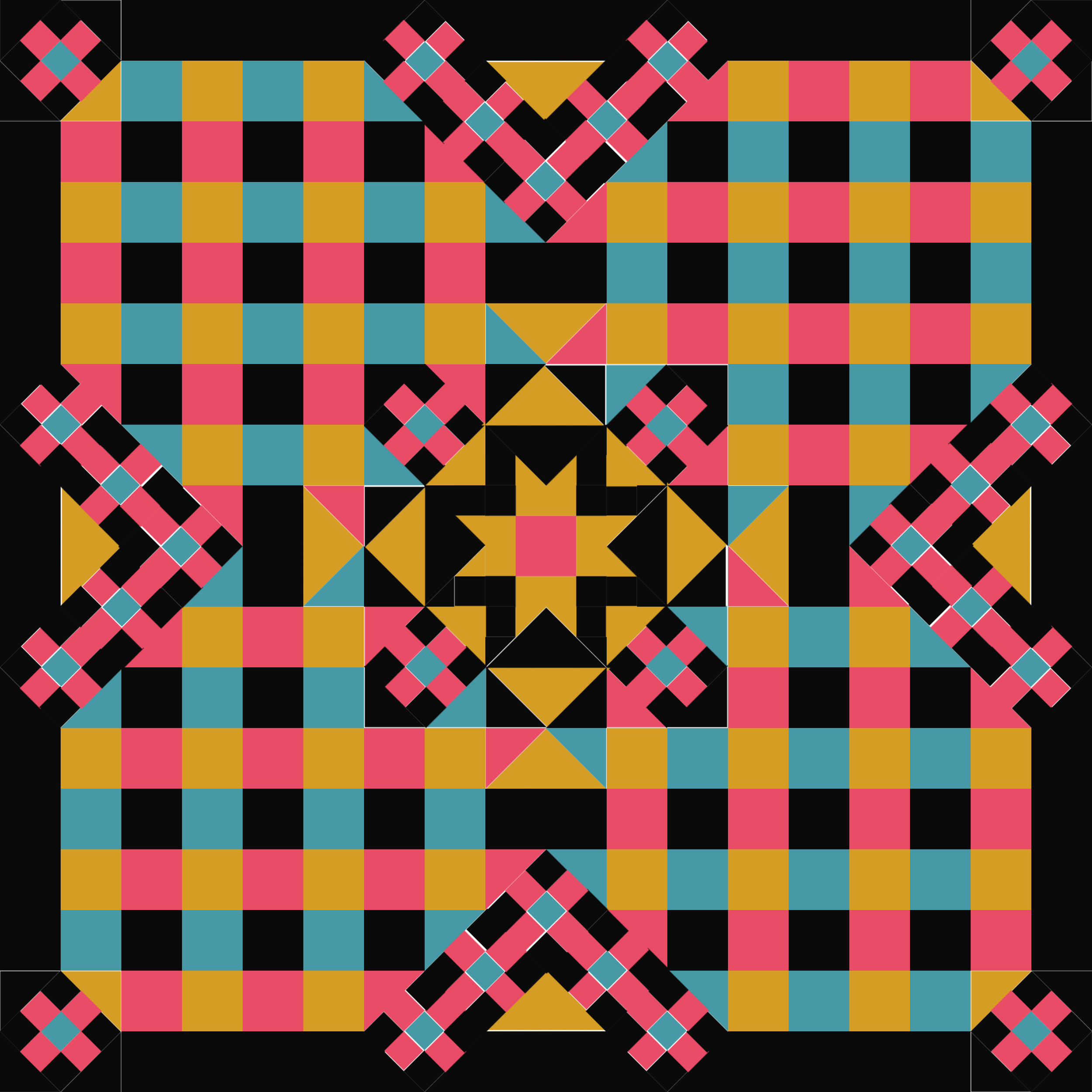
Lumber Jane is a medallion-style quilt featuring large sections of Buffalo Plaid. Strategic fabric placement can create some cool transparency effects, but what if you’re a scrappy quilter? Is there a way to incorporate a variety of prints into this pattern? Yes, there is, and I’m going to show you how!
(This post may contain affiliate links)

Lumber Jane has a striking star medallion inside a larger floral design, and during the design process I focused on using solids to make the piecing POP. Buuuuuuut, I also love prints. Could Lumber Jane be pieced with prints and still look amazing? And what if it was scrappy??
What I Mean By “Scrappy”
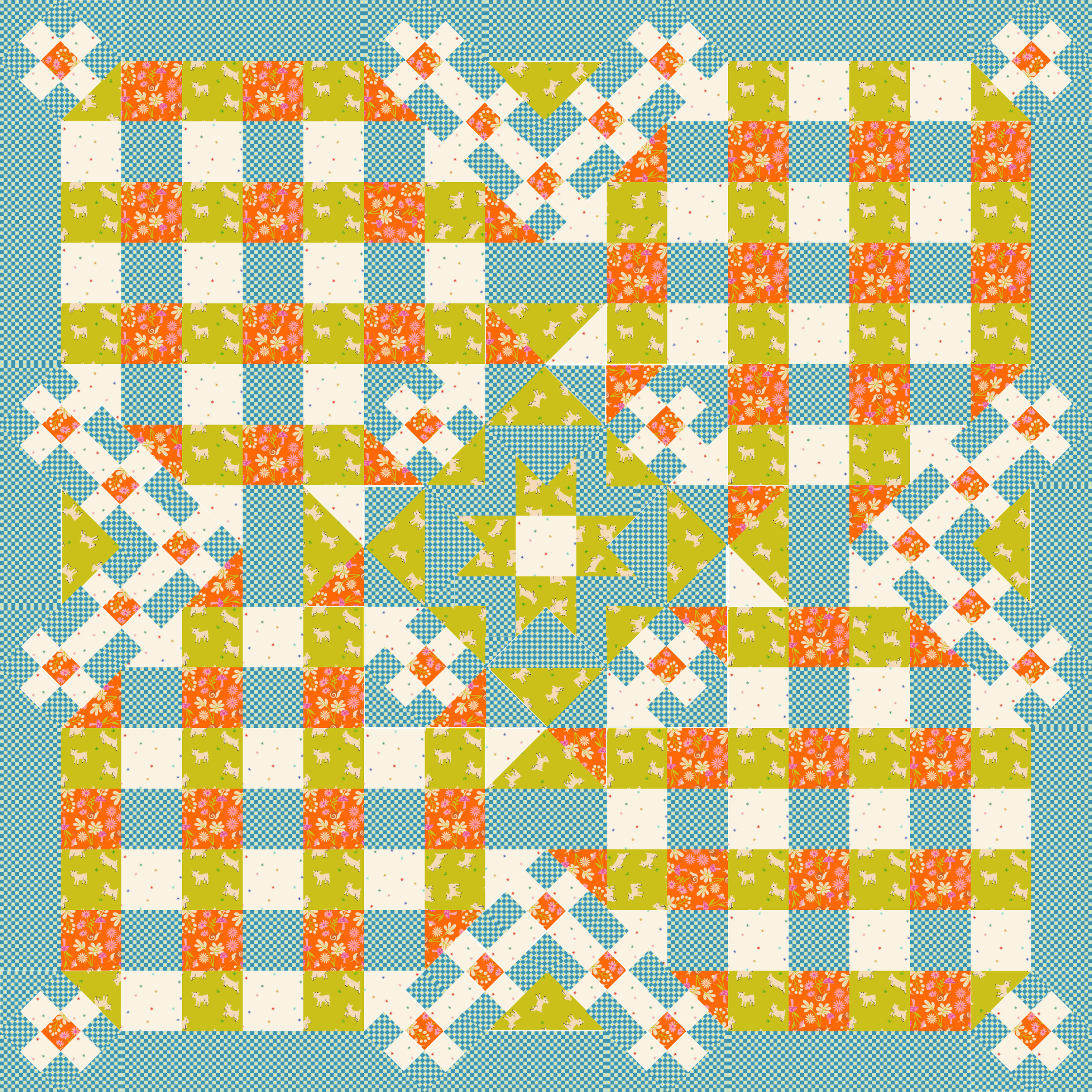
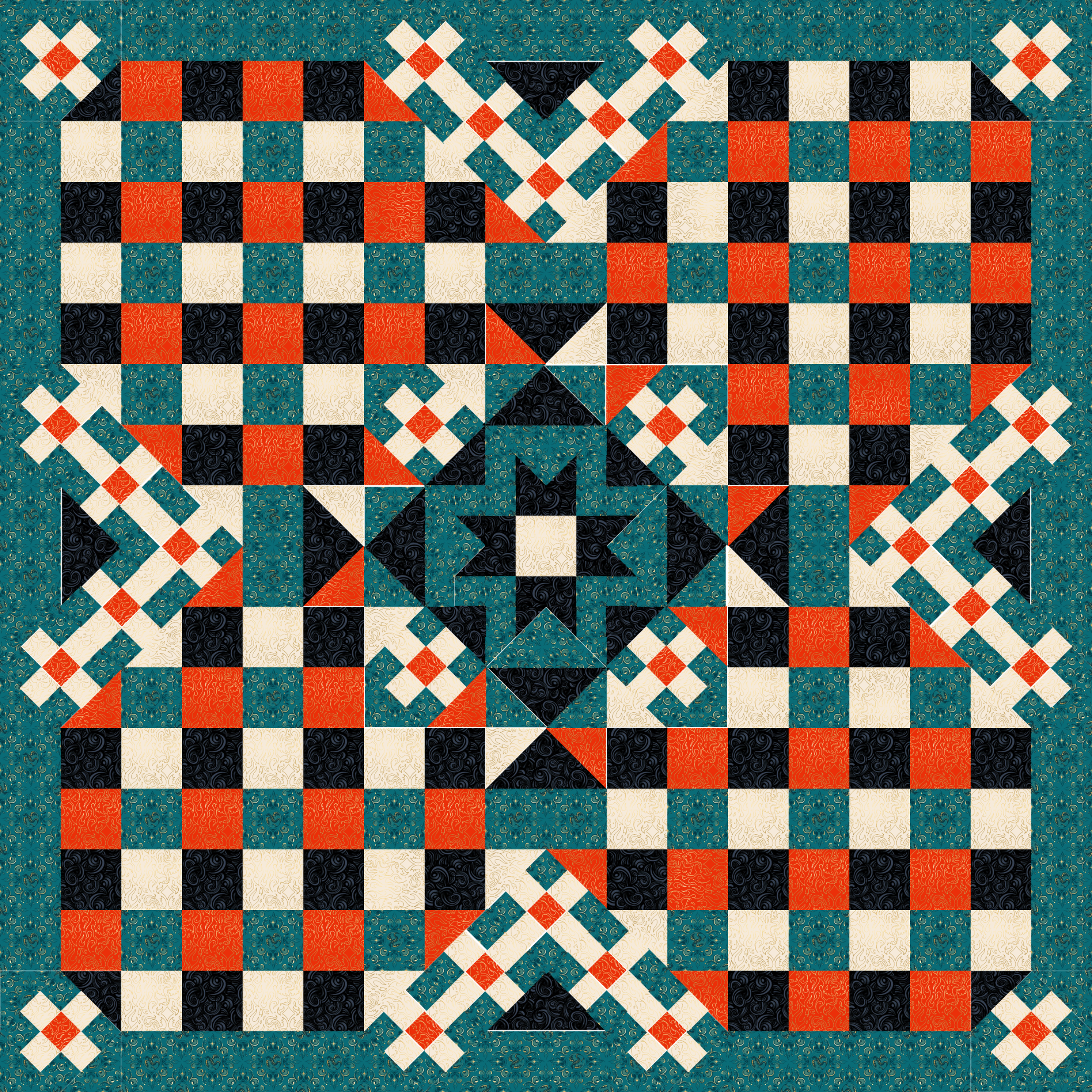
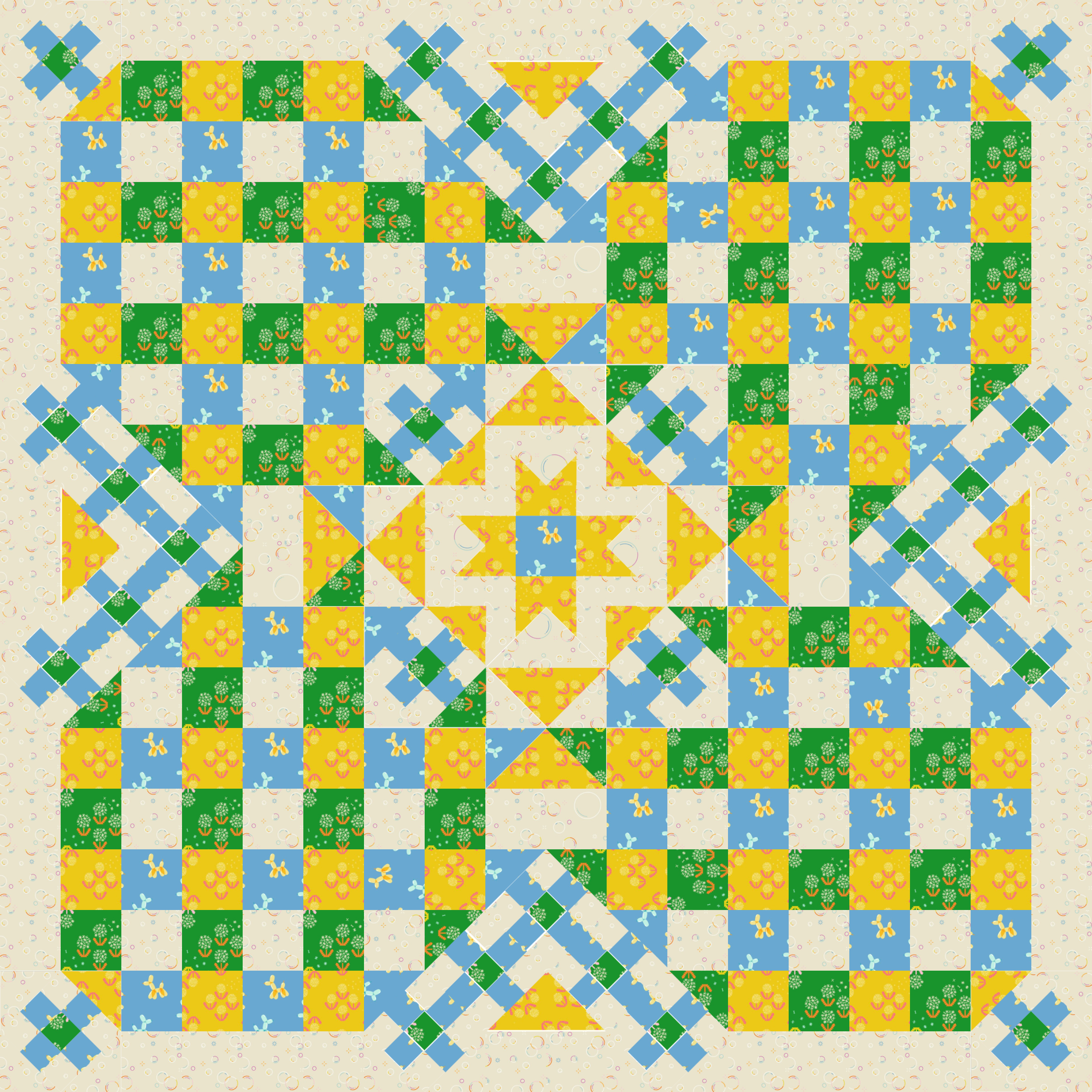
You could absolutely swap prints for solids to make Lumber Jane. In fact, I mocked up a few options with some Ruby Star Society collections above (Left to right: Animal Animal (2025), Fireglow (2026), and Float (2027)). I wouldn’t call these versions “scrappy,” though, because they still use yardage of just four fabrics.
When I say “scrappy” I mean that Color A might be all the same color(ish), but several different fabrics.
It often involves a bit of creativity with the pattern, too, because the cutting directions may be a little bit different. For example, it might mean cutting 12-15 18” strips instead of 6 WOF (width of fabric) strips because I’m working with smaller chunks to achieve more variety. What scrappy costs in patience and a bit of creative thinking, it makes up for in texture, fun, and, if you pull from your stash, savings!
Choosing Fabrics
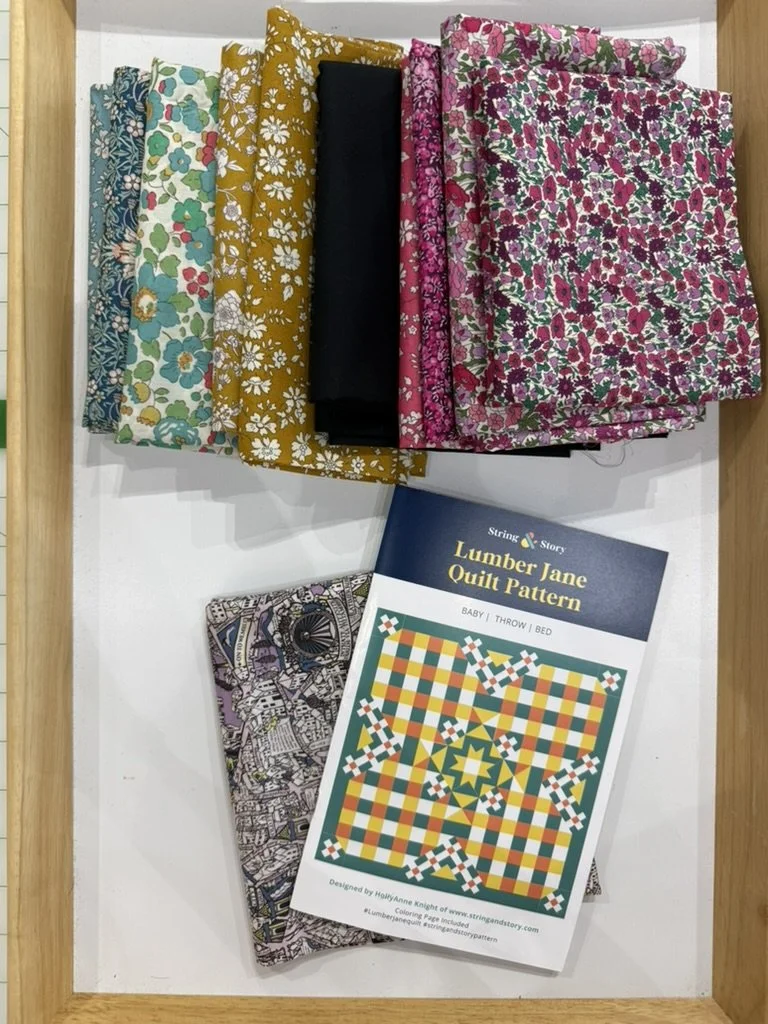
When choosing fabrics for a scrappy quilt, I usually work with fat quarter and half yard size chunks of fabric. You could absolutely go ham and dig little bits and bobs out of your precut scraps, but my patience does have limits. If you go the “literally all the little bits” route, I would plan to lay out pieces before you sew them together just to make sure you’re still paying attention to a couple of principles I like to keep in mind:
First, I like to have a constant. Any time I am “translating” a pattern to make it scrappy, I like to have one fabric that is still yardage. It could be a solid or a print, but it will be the same throughout the quilt and provide an anchor for the rest of the fabrics to play. For Lumber Jane, I recommend making Fabric C your constant. It is the background of the medallion star and the outer border, so it creates structural stability in the quilt.
Second, keep your selection of fabrics as close to the same value as possible. Not that all fabrics A-D should be the same value but WITHIN all the fabrics that will become parts of “Fabric A,” they should be similar values. I also happened to pick fabrics that are similar scales, but that is less vital. Based on this, you may spot the aqua floral in the photo above that may not make it into my final quilt since it is quite a bit lighter than the other aquas. Time will tell!
How Much Fabric?
As I mentioned above, “translating” a pattern to be scrappy can mean getting a bit creative with the cutting. It’s a little like figuring out equivalent fractions. Since I’m often working with different cuts of fabric, I don’t necessarily sit down and do this re-mathing ahead of time. Instead, it’s a bit of a trial and error adventure to get all the pieces I need and like the arrangement of the scrappy fabrics.
As you can imagine, this might take extra fabric. I usually plan for at least one more fat quarter’s worth of fabric than what the pattern calls for. So if the pattern says “2 yards,” I’m going to have 9 fat quarters or 4 half yards and a fat quarter, etc. Thankfully, since you’re working scrappy, you can always add more if you need to as well.
Note Bene
One of the challenges of working scrappy is that you can’t easily predict exactly what the quilt will look like. Personally, I think that’s part of the fun as well because the quilt reveals itself as you piece. However, I’m a big fan of loving the quilts you make, so here’s two more tips:
First, use a tool like PreQuilt to mock up your quilt in equivalent solids. It won’t capture the texture of having a scrappy fabric pull, but you can make sure that you like where the colors will land and how they play together.
Second, in the wise words of my friend Frances Dowell, “Make visual decisions visually.” Use your design wall liberally and your seam ripper as needed. Don’t get bogged down in over-engineering the effect, but if something looks funky in a way you don’t like, you can always change it!
Closing Thoughts
I’m a big fan of scrappy quilts, and I think you can preserve a striking quilt pattern design, like Lumber Jane, while having fun with the fabrics. If you’re nervous, start with tone on tone prints mixed with solids, and as you gain confidence, you can have more fun with more patterns! Huzzah!